On real roads
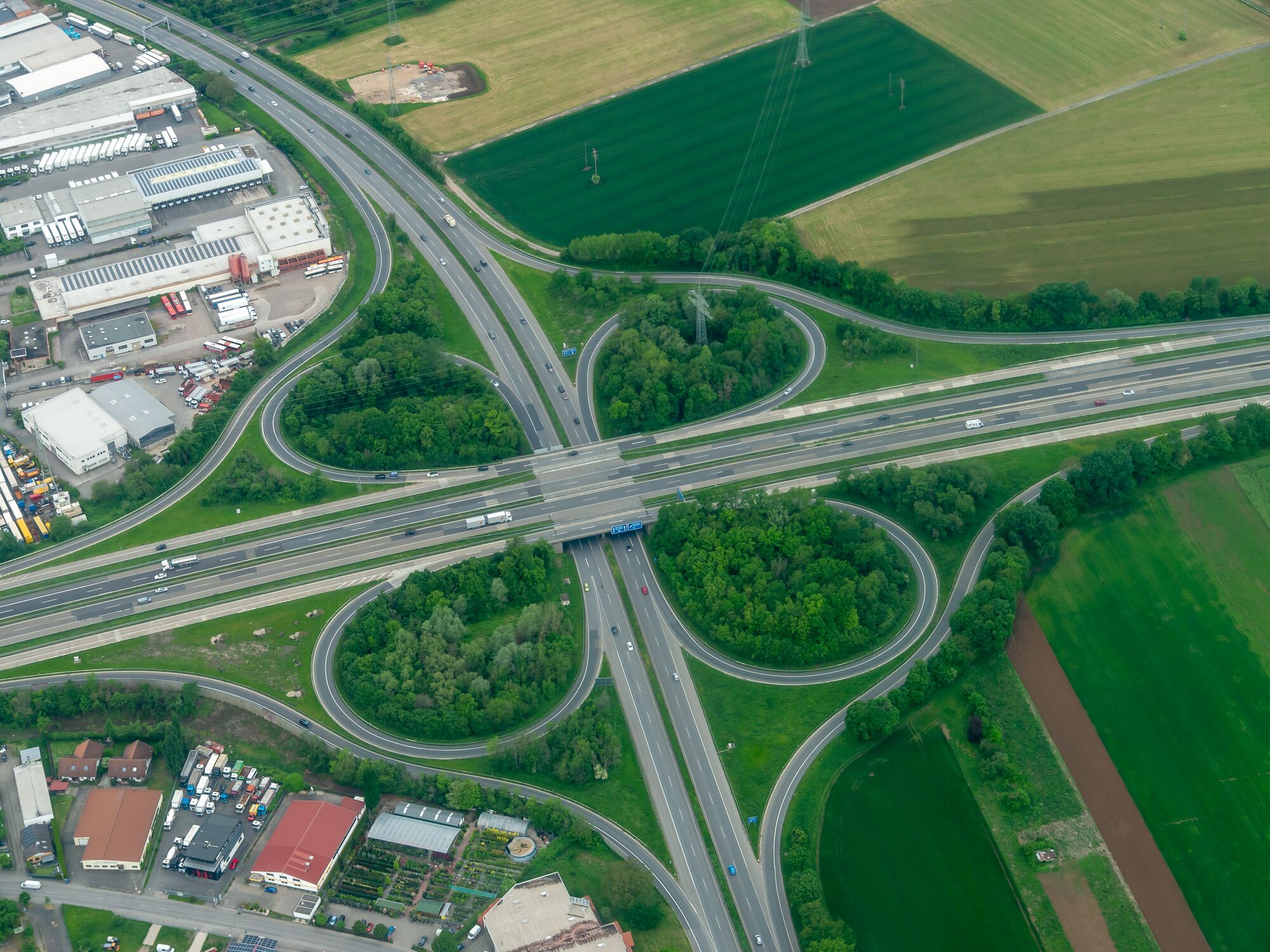
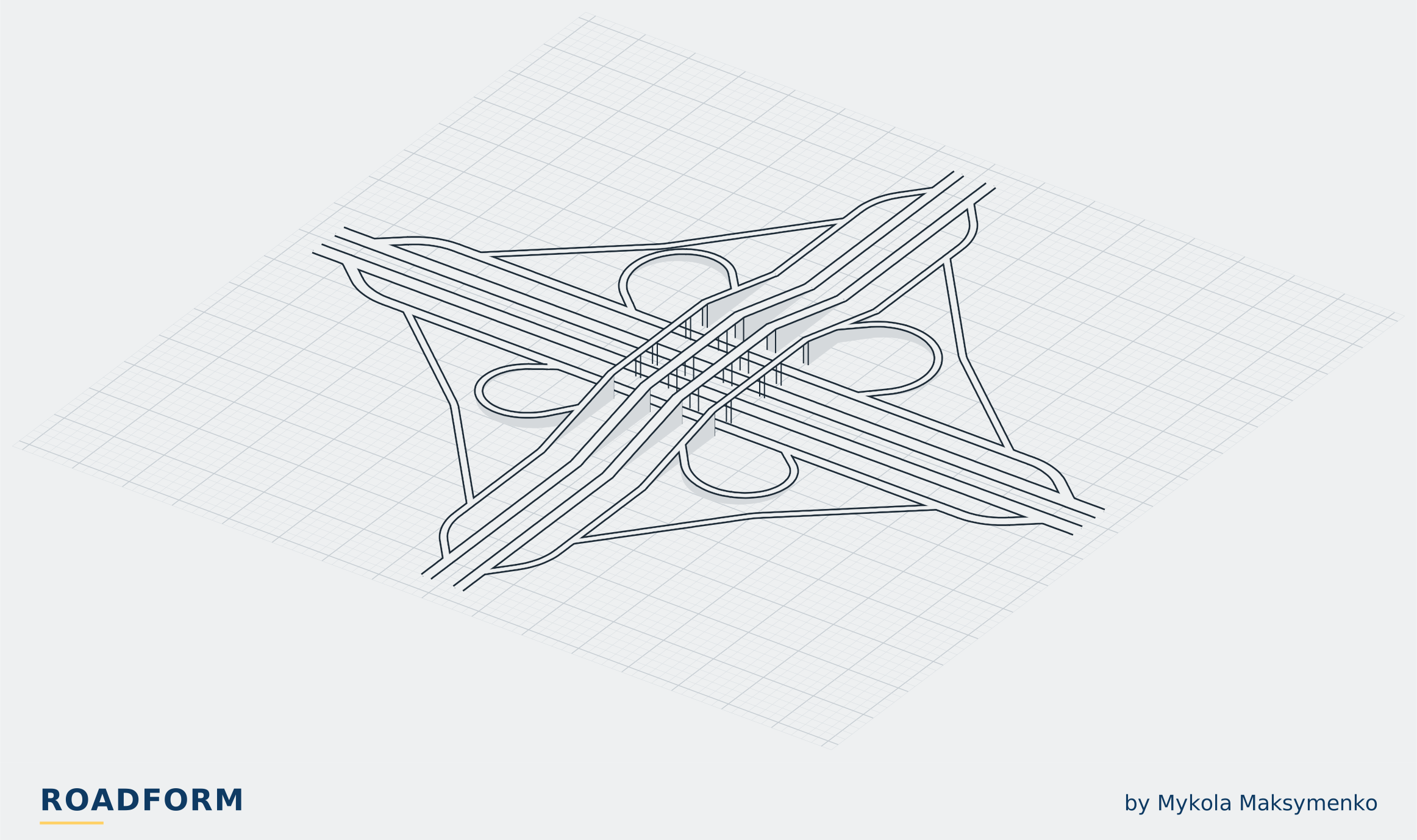
A full cloverleaf has a loop in each of its four corners for the left turns and outer ramps for the right turns, and needs only one bridge.1,2 In the plain form the loops leave and join the highway itself, one close behind the other, so drivers coming off one loop and drivers heading for the next weave across each other on the highway.1,3 With collector-distributor roads, or C-D roads, a separate roadway beside the highway leaves it at one exit before the bridge and rejoins it at one entrance, and the ramps on that side leave and join this roadway instead.2,4 The weaving moves off the through lanes onto the slower C-D road.2 Manuals call the form a full cloverleaf with collector-distributor roads or roadways; California's manual calls it Type F-4.4,5,6
In 1916 Arthur Hale of Rowlandsville, Maryland, was granted a US patent for a street crossing with four spiral ramps and four level ways around a bridge, on which no stream of traffic had to cross another at grade.7 The first cloverleaf in the United States was built in 1928 at Woodbridge, New Jersey, where Route 1&9 meets Route 35.8,9 Canada's first was completed in 1937 at Port Credit, on the QEW between Toronto and Niagara Falls.9 After 1956, as the Interstates were built, cloverleafs were relatively common both between freeways and at suburban crossings, with two exits on each approach and four weaving sections.9
A 1969 study found that full cloverleafs without C-D roads had a higher crash rate than any other standard type of interchange it studied.10 A 1973 study found that most state design engineers accepted a 1966 analysis that put the capacity of a weaving section at 1,000 vehicles an hour without a C-D road and 1,500 with one. Most of them agreed that a cloverleaf should not be built without C-D roads.10 Yet in a survey of ten states for the Federal Highway Administration, published in 1975, all but Texas still built cloverleafs without them. Texas required a C-D road on every freeway through a cloverleaf, and California had altered most of its cloverleafs that had none.10 In Germany, a 1977 study says the cloverleafs built on the autobahns so far were cheap to build but short of capacity for heavy turning traffic. Comparing cloverleaf designs, it found that laying the weaving lanes directly beside the through lanes, without a C-D road, would cut the cost by about 20 % for the same capacity.11
Texas now says cloverleafs were popular in the early years of freeway building but are usually no longer preferred between freeways, and that one that is built should have C-D roads.12 California finds the four-quadrant cloverleaf not desirable at a local road, for its cost and its short weaving sections, and wants C-D roads in every one. Between freeways, the cloverleaf with C-D roads, its Type F-4, is ordinarily the most economical interchange that provides every turn; it suits places where the turning traffic is low enough for the short weaving sections.6 South Carolina seldom considers a cloverleaf without C-D roads a viable option, and where two fully access-controlled highways meet, a full cloverleaf with C-D roads is the least it builds.4 German guidelines have the same roadway, the Verteilerfahrbahn: in place of a weaving section on the main carriageway, it keeps the through traffic clear of both weaving streams.13,14
- Levels
- 2
- Ramps
- a loop and an outer ramp in each of the 4 corners10
- On the through lanes
- 1 exit, before the bridge, and 1 entrance per direction2
- Weaving sections
- 49
- Weaving capacity
- 1,000 vehicles an hour without a C-D road, 1,500 with one (a 1966 analysis)10
- Loop radius
- about 180 to 250 ft (55 to 76 m)2
- C-D road
- 1 or 2 lanes; design speed desirably within 10 mph (16 km/h) of the highway's2
- Land
- about 20 acres (8 ha) per quadrant4
- Heavy traffic
- handled traffic best of 4 forms modelled in a Louisiana study, above 7,000 entering vehicles an hour15
- Crashes
- mostly in the weaving sections, at the Louisiana cloverleafs studied15
- Suits
- two fully access-controlled highways: the least South Carolina builds there4
- Limit
- left turns over 1,200 passenger cars an hour: a loop has one lane and a restricted speed12
Where to see one
The Roadform adaptation
In Roadform
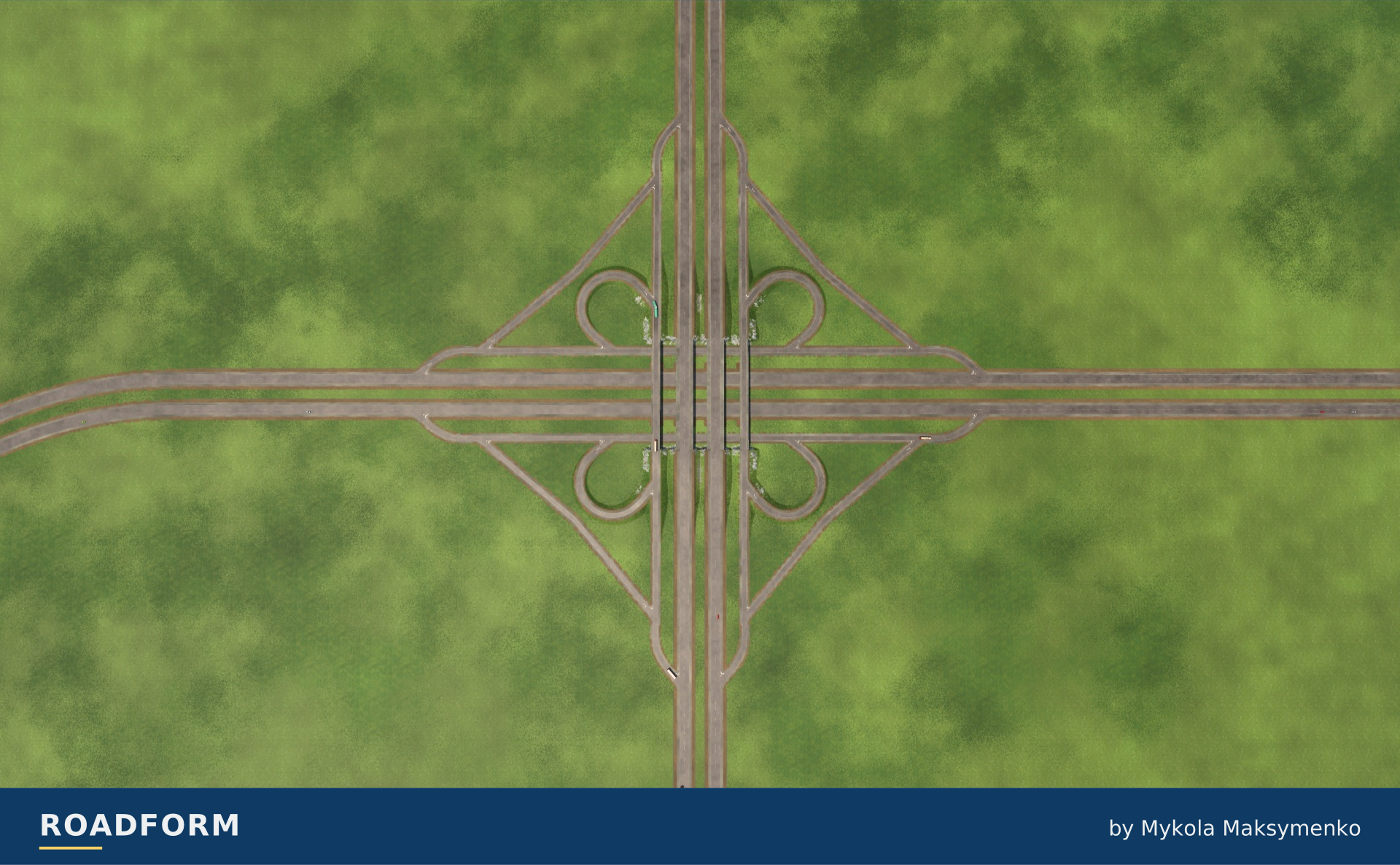
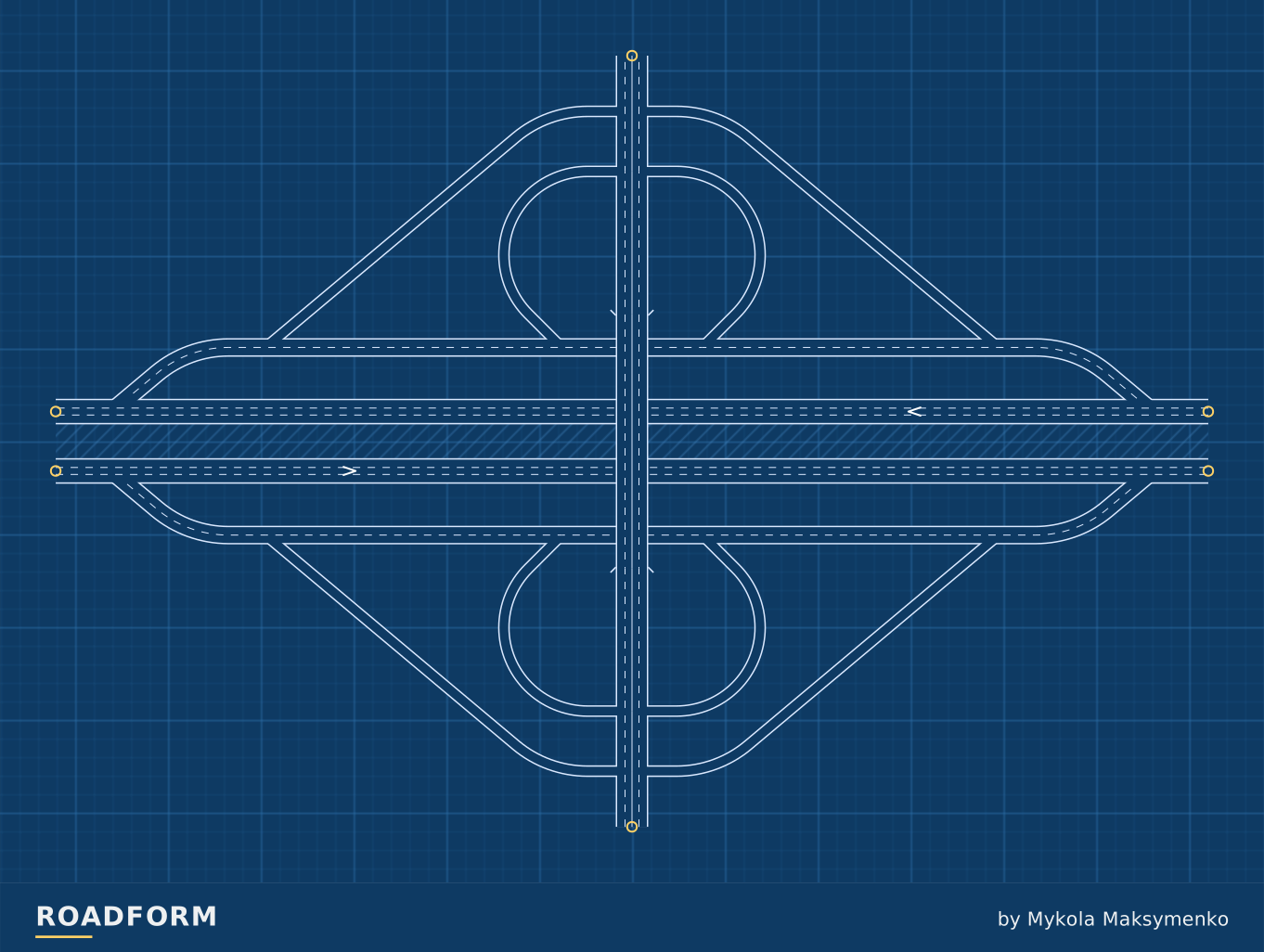
Four loops for the left turns, with collector roads that keep the weaving off the highway.
Which road crosses?
The crossing can be another highway or a main road. The loops and connecting ramps adapt to that choice.
TF3 · M · On top: Crossing road · Traffic side: Right.
Scale and capacity
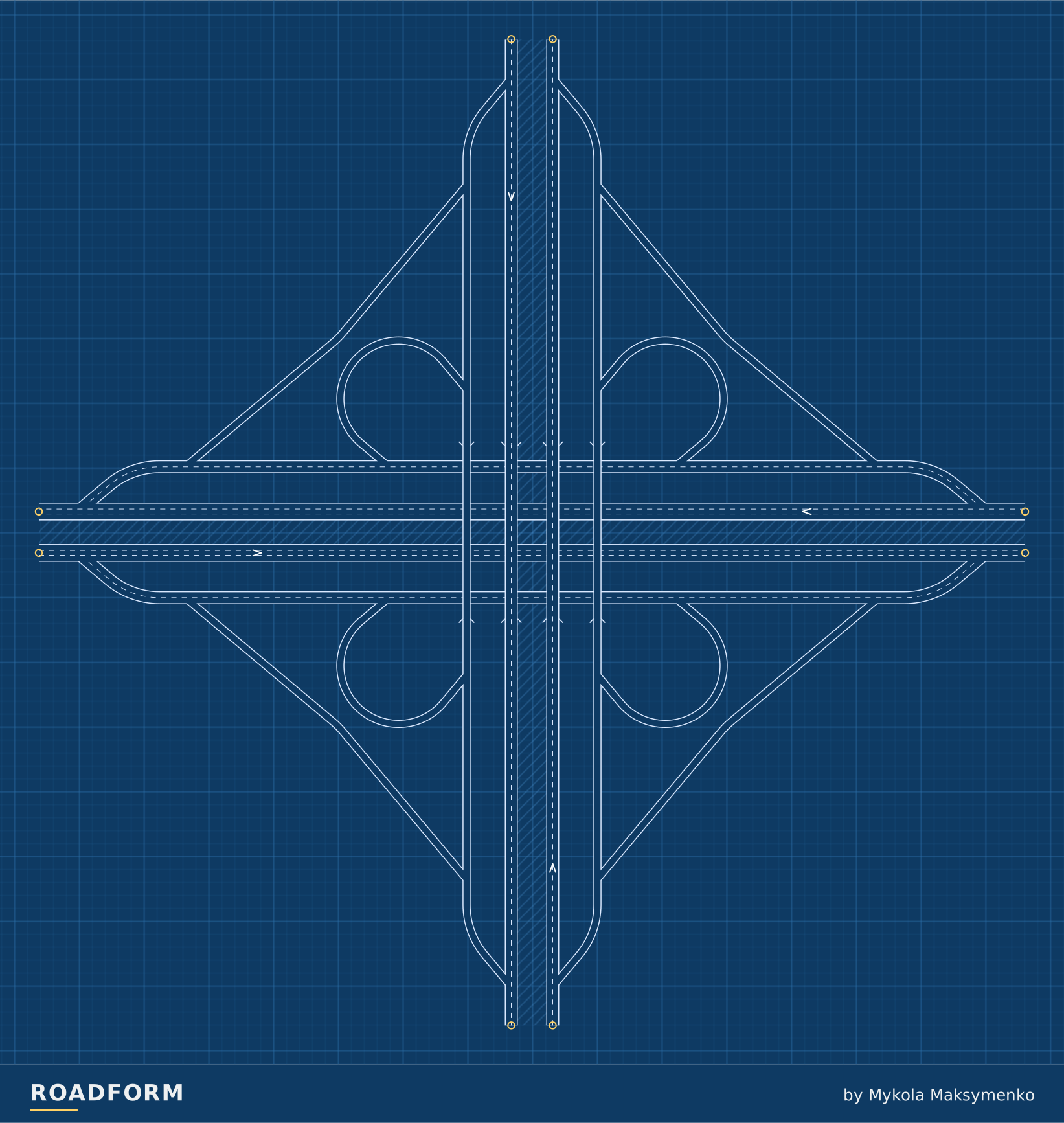
Size changes the road widths and the space the layout needs. The guide below uses the default arrangement. The layout reserves room for wider roads.
| Layout | Width × depth | Highest road | Lanes per direction |
|---|---|---|---|
| S | 663 × 663 m | 8 m | Main highway: 2 Crossing highway: 2 Main C-D roads: 1 Crossing C-D roads: 1 Ramps: 1 Loops: 1 |
| M | 762 × 762 m | 8 m | Main highway: 3 Crossing highway: 2 Main C-D roads: 2 Crossing C-D roads: 1 Ramps: 1 Loops: 1 |
| L | 861 × 861 m | 8 m | Main highway: 3 Crossing highway: 3 Main C-D roads: 2 Crossing C-D roads: 2 Ramps: 2 Loops: 2 |
Which road takes the bridge?
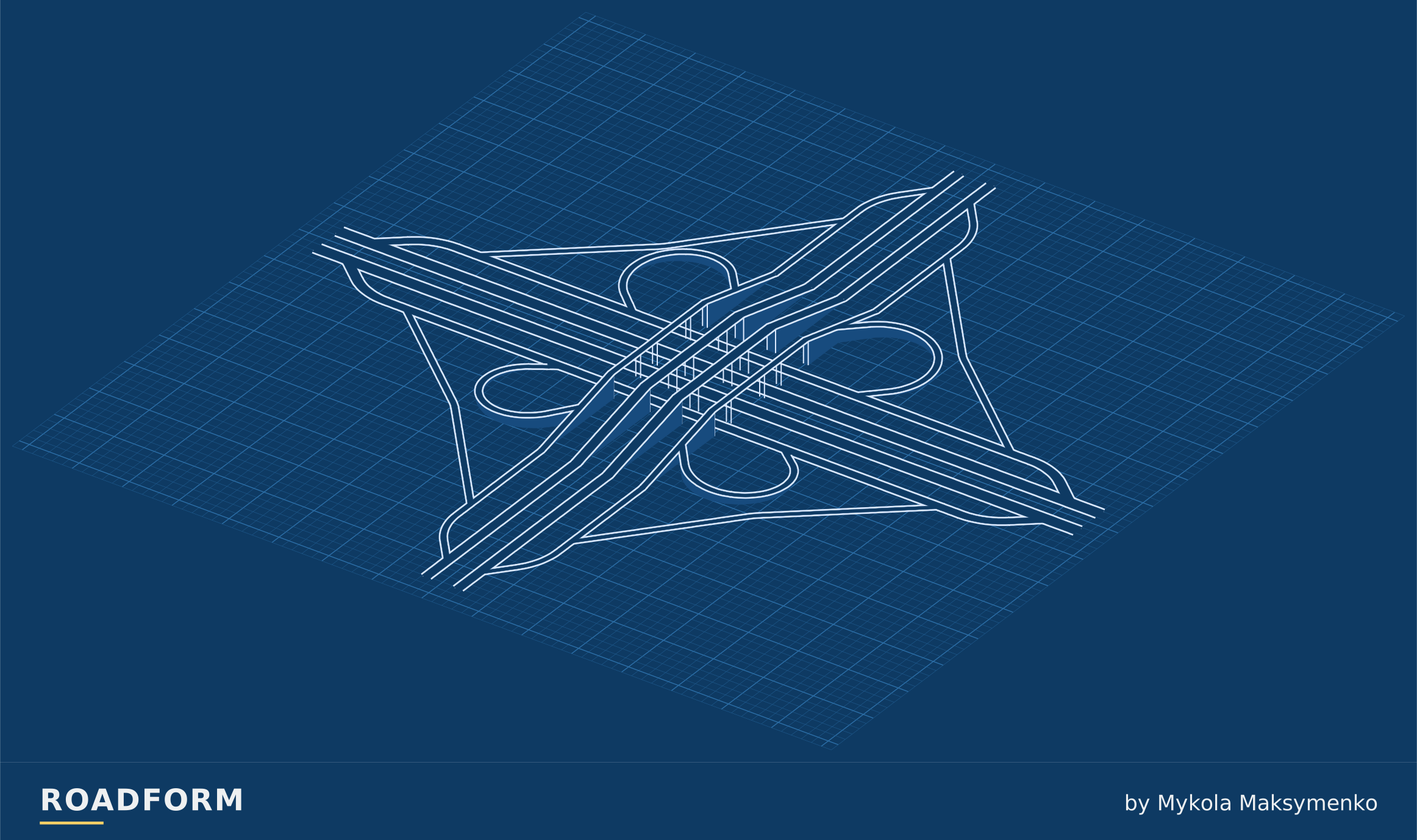
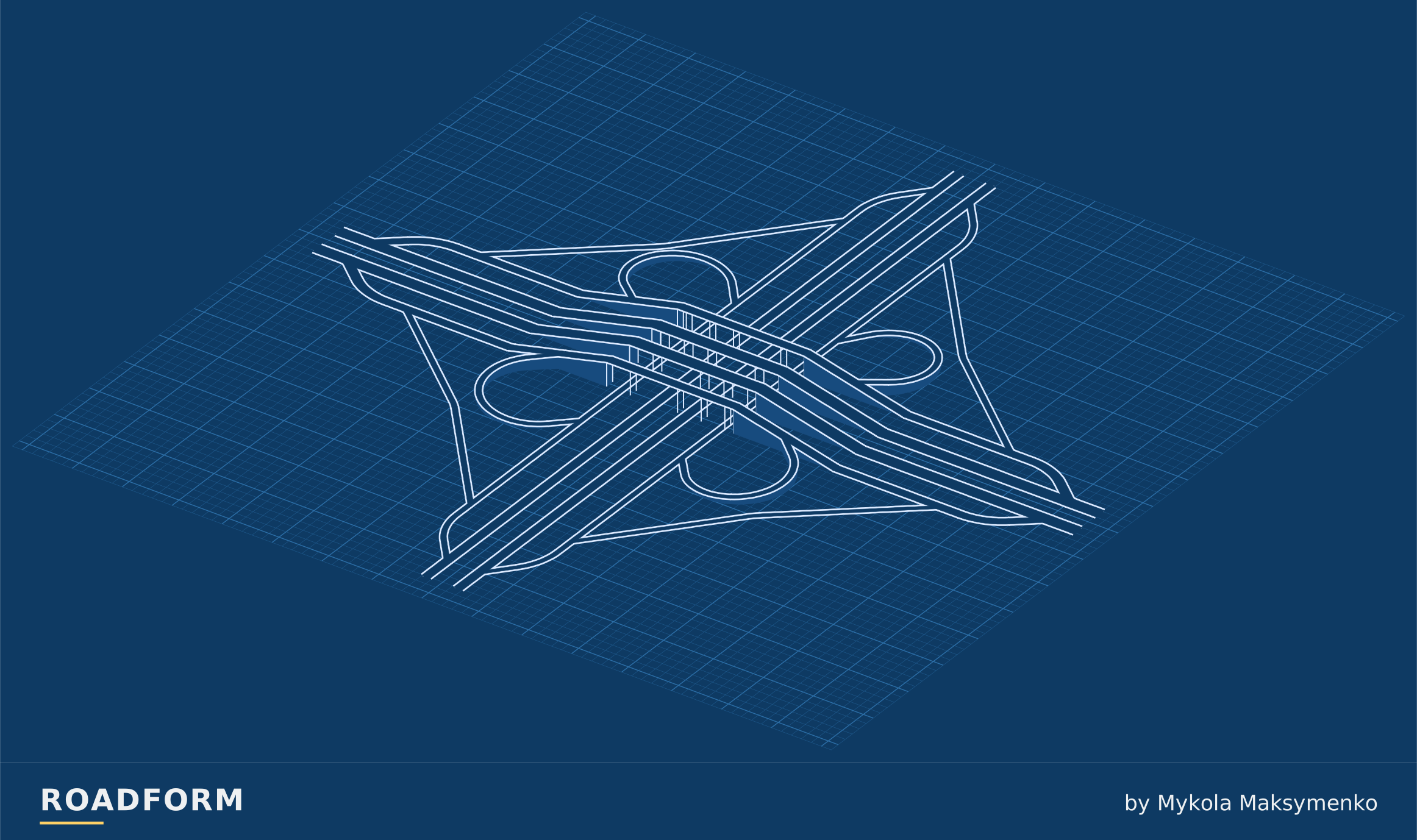
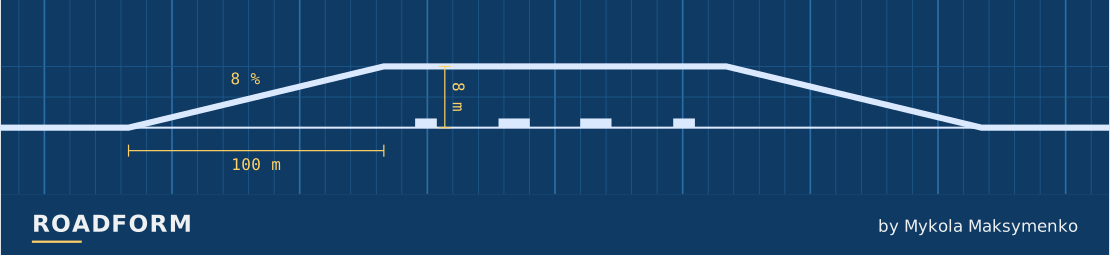
Choose which road runs above the crossing. This choice works with every form and size.
TF3 · M · Crossing road: Highway · Traffic side: Right. Heights ×3.
Sources and credits
- Design Manual M 22-01.23, Chapter 1360 Interchanges, Washington State Department of Transportation, 2024. wsdot.wa.gov
- Indiana Design Manual, Chapter 48 Interchanges, Indiana Department of Transportation, 2025. www.in.gov
- Engineering Policy Guide, 234.5 Cloverleaf Interchanges, Missouri Department of Transportation. epg.modot.org
- Roadway Design Manual, Chapter 10 Interchanges, South Carolina Department of Transportation, 2021. www.scdot.org
- Manual on Uniform Traffic Control Devices, 2009 Edition, Figure 2E-36 (long description), Federal Highway Administration, 2009. mutcd.fhwa.dot.gov
- Highway Design Manual, Chapter 500 Traffic Interchanges, California Department of Transportation, 2023. dot.ca.gov
- Street-crossing, US Patent 1,173,505, A. Hale, United States Patent Office, 1916. patents.google.com
- Transportation Firsts, New Jersey Department of Transportation. www.nj.gov
- Evolution of Interchange Design in North America, J. P. Leisch and J. Morrall, Transportation Association of Canada, 2014. www.tac-atc.ca
- Improving the Traffic Operations and Safety of Full Cloverleaf Interchanges (FHWA-RD-75-126), T. J. Foody and J. H. Wray, Ohio Department of Transportation, for the Federal Highway Administration, 1975. rosap.ntl.bts.gov
- Untersuchung des baulichen Aufwandes und der Leistungsfähigkeit von Autobahnknoten (Forschung Straßenbau und Straßenverkehrstechnik 230), abstract, K. H. Trapp; abstract in the Transportation Research Board's TRID database, 1977. trid.trb.org
- Roadway Design Manual, 15.3 Types of Interchanges, Texas Department of Transportation. www.txdot.gov
- Verteilerfahrbahn mit drei oder mehr Aus-/Einfahrten / Collector-Distributor Roads with three or more Entrances/Exits (Straßenverkehrstechnik 56, no. 12), abstract, W. Wirth; abstract in the Transportation Research Board's TRID database, 2012. trid.trb.org
- Verflechtungsstrecken zwischen Knotenpunkten an Autobahnen (Berichte der BASt, V 401), J. Geistefeldt et al. for the Bundesanstalt für Straßen- und Verkehrswesen, 2025. bast.opus.hbz-nrw.de
- Safety and Traffic Operations at Cloverleaf Interchanges (FHWA/LA.24/1SS), H. Hassan and N. Khadka, Louisiana State University, for the Louisiana Department of Transportation and Development, 2024. www.ltrc.la.gov
Real-world photo credits accompany each image. Roadform figures and measurements use Transport Fever 3.