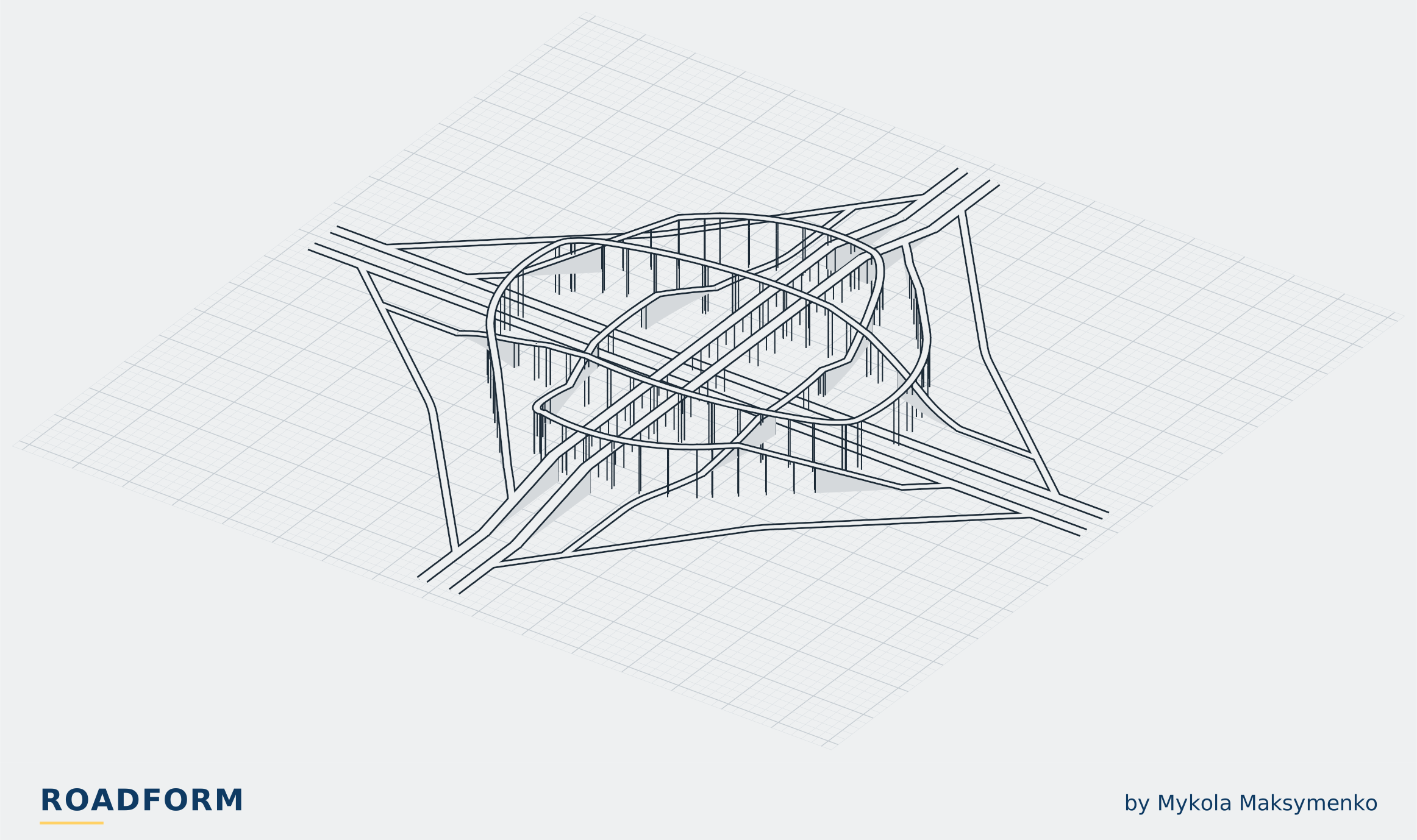
On real roads
A turbine interchange, also called a whirlpool, joins two freeways with a directional ramp for every turn.1,2 TxDOT describes its left turns as right-exit ramps that sweep round the centre of the interchange in a spiral.1 A four-level stack takes both freeways and all the left turns through one point in the centre; the turbine needs fewer levels, usually two or three.1,3
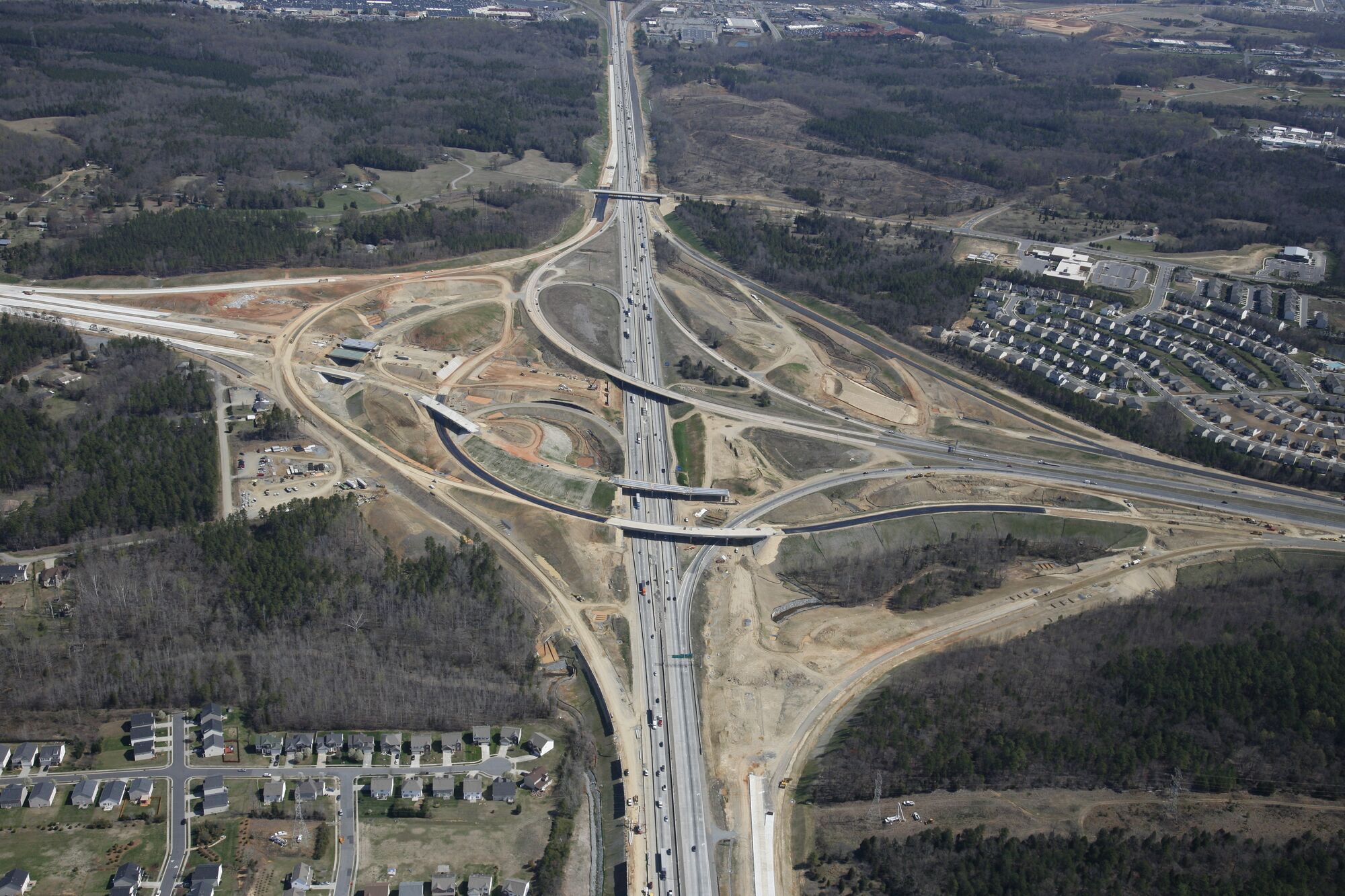
In the United States the turbine was rare in 2013. That year FHWA called the one being built where I-85 meets I-485, in the Charlotte area, the first in North Carolina and one of only a handful in the country.4 In a 2014 presentation, NCDOT and Lane Construction pointed to similar turbines in Tampa, Florida, and at Thorpe in the United Kingdom.5
For Charlotte, NCDOT's slides list a four-level stack's challenges: high bridges over heavy traffic, tall retaining walls and two million cubic yards (about 1.5 million m³) of earth to bring in.5 The Lane/STV team proposed a two-level turbine, with smaller bridges, flatter road profiles and much less earthwork.5 In 2013 FHWA gave it 18 bridges, three times more than a previously considered design; their smaller sizes were expected to make it easier to build and maintain, saving an estimated $30 million by NCDOT's figure.4 NCDOT's 2014 slides count 19 new bridges.5
Two state DOTs have chosen turbine ramps to rebuild a cloverleaf. TxDOT is turning the cloverleaf of US 69 and SH 73 near Port Arthur into a turbine, entirely within the existing right of way.6 At I-16 and I-95 in Georgia, GDOT found by benefit/cost analysis that a full rebuild was not fiscally responsible, and chose to replace two of the four loops with turbine ramps, a partial turbine and the first in the state.2 NCDOT's guidance sums the form up: many bridges, but a smaller footprint than some other designs, bridges that are not tall, ramps that can be faster, no weaving and no exits or entrances on the left. It should be considered when an interchange is built or rebuilt where two freeways cross.7
- Levels
- usually 2 or 3; a four-level stack has 41
- Left turns
- right-exit ramps that sweep round the centre, as TxDOT describes them1
- Ramps
- directional, not loops: shorter, faster, more capacity1
- Weaving
- none, and no exits or entrances on the left7
- Bridges
- many, but not tall7
- At I-85 and I-485
- 18 bridges in 2013, three times more than a previously considered design, but smaller; an estimated $30 million saved4
- Worth considering
- where two freeways cross and an interchange is built or rebuilt7
Where to see one
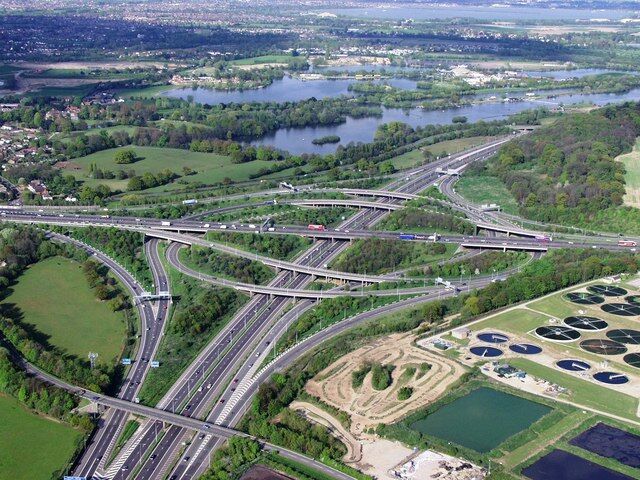
The M25 and the M3 at Thorpe Interchange, Surrey, from the air, 2001. Ray Jones, CC BY-SA 2.0, source, cropped, shown in greyscale M25 at M3, Thorpe Interchange, Surrey, UK. Map
The Roadform adaptation
In Roadform
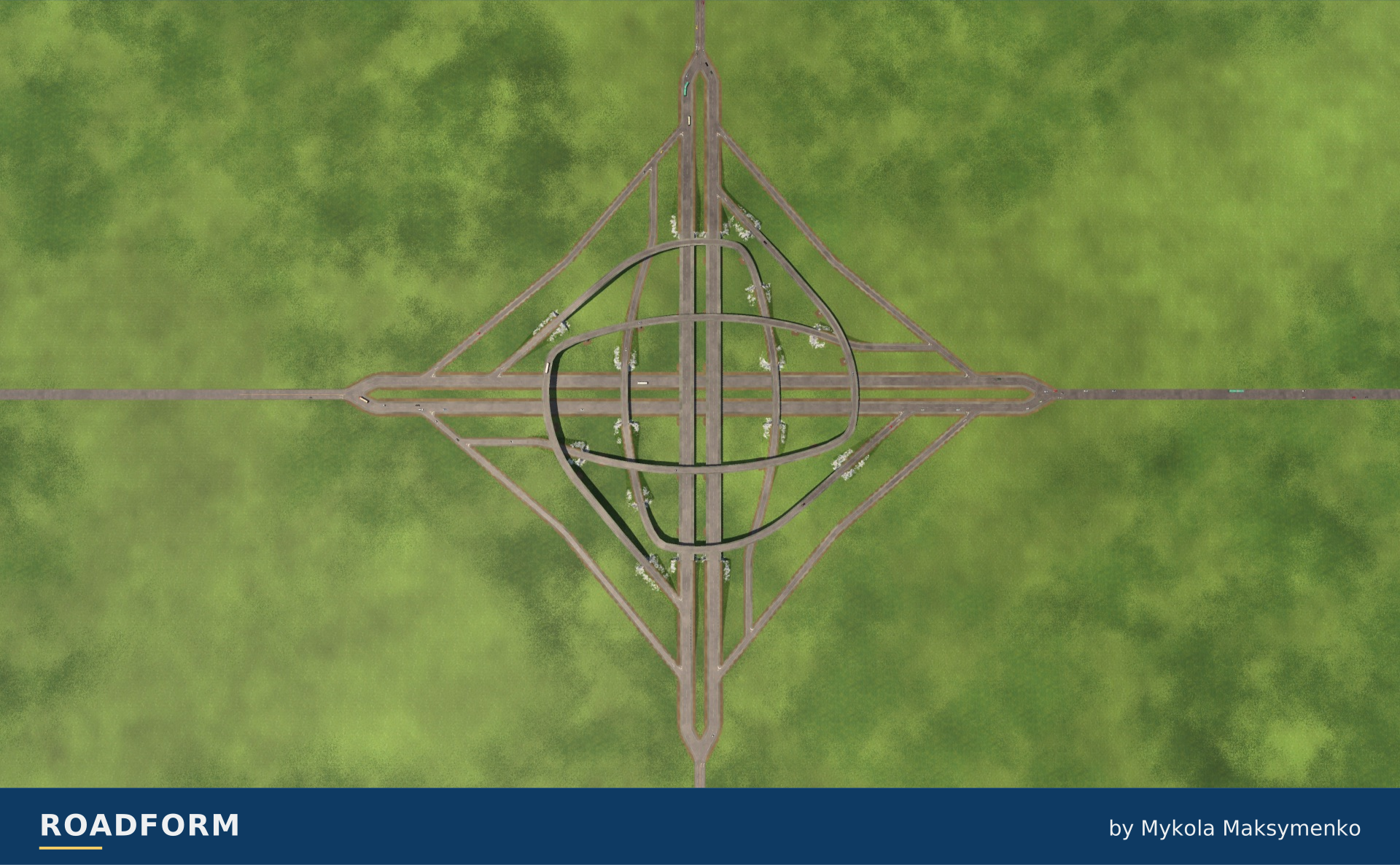
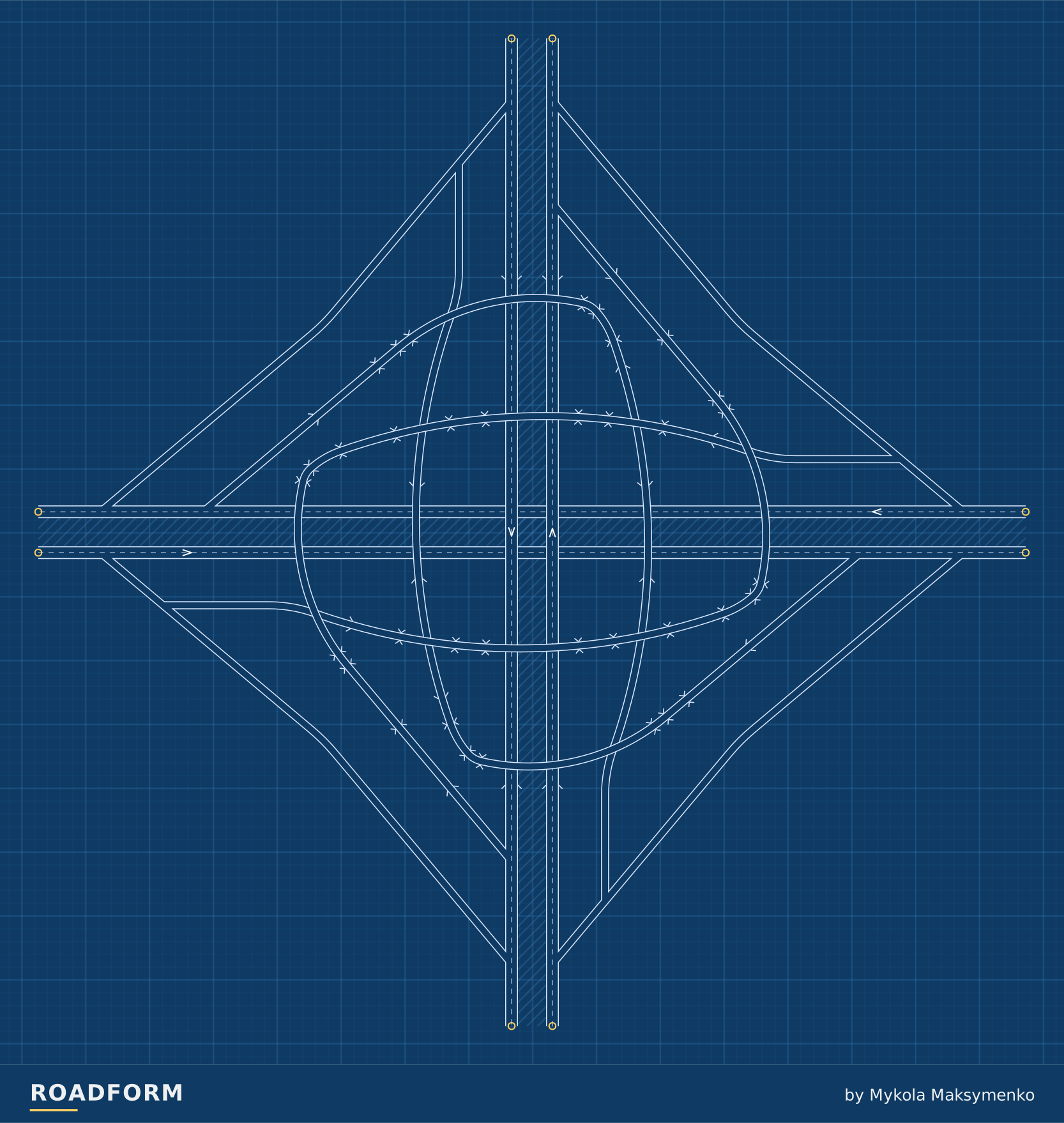
Two highways cross; each left turn sweeps round the centre over both highways.
Reading the connections
TF3 · S · On top: Crossing road · Traffic side: Right.
Scale and capacity
Size changes the road widths and the space the layout needs. The guide below uses the default arrangement. The layout reserves room for wider roads.
| Layout | Width × depth | Highest road | Lanes per direction |
|---|---|---|---|
| S | 773 × 773 m | 16 m | Main highway: 2 Crossing highway: 2 Ramps: 1 |
| L | 773 × 773 m | 16 m | Main highway: 3 Crossing highway: 3 Ramps: 2 |
Which road takes the bridge?
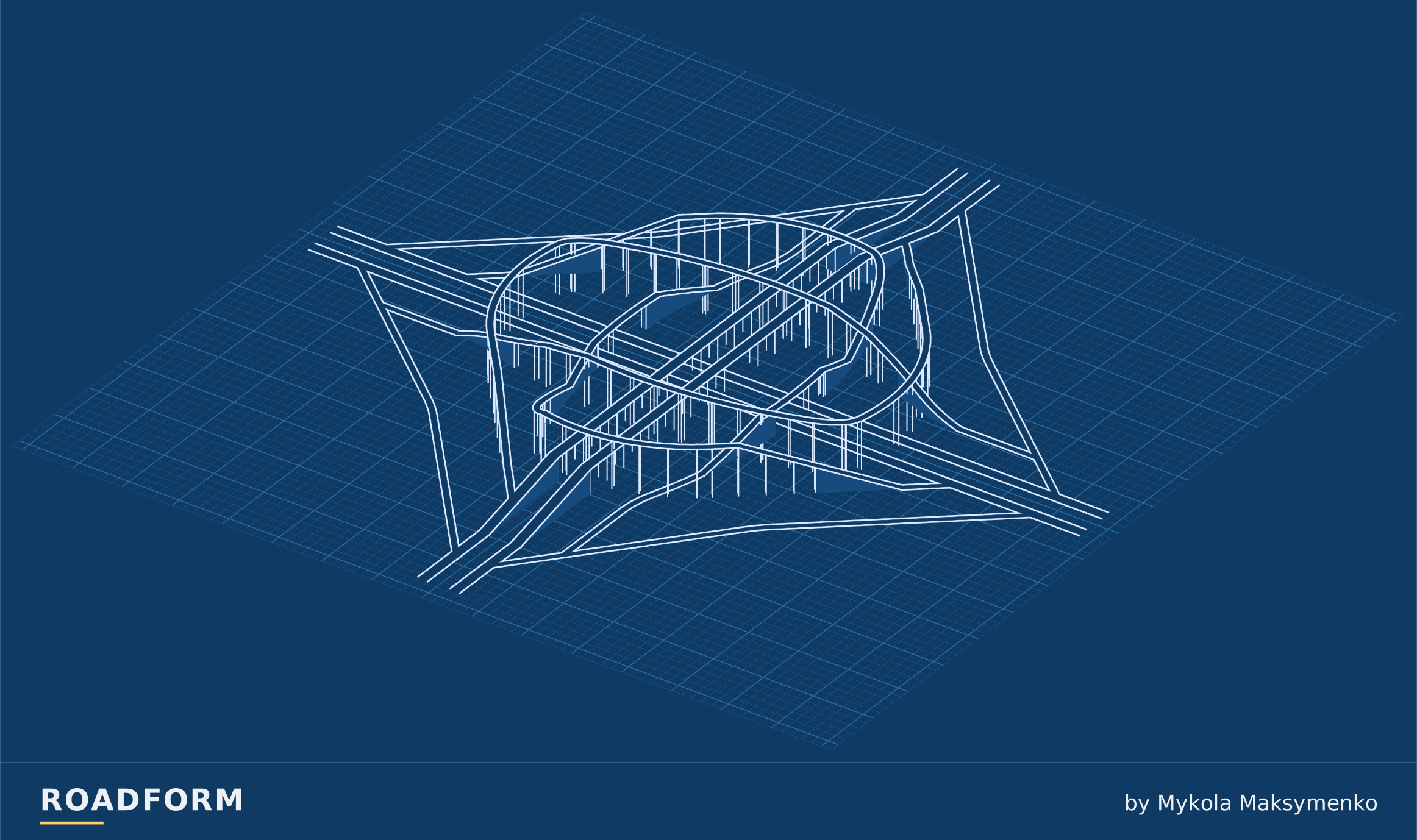
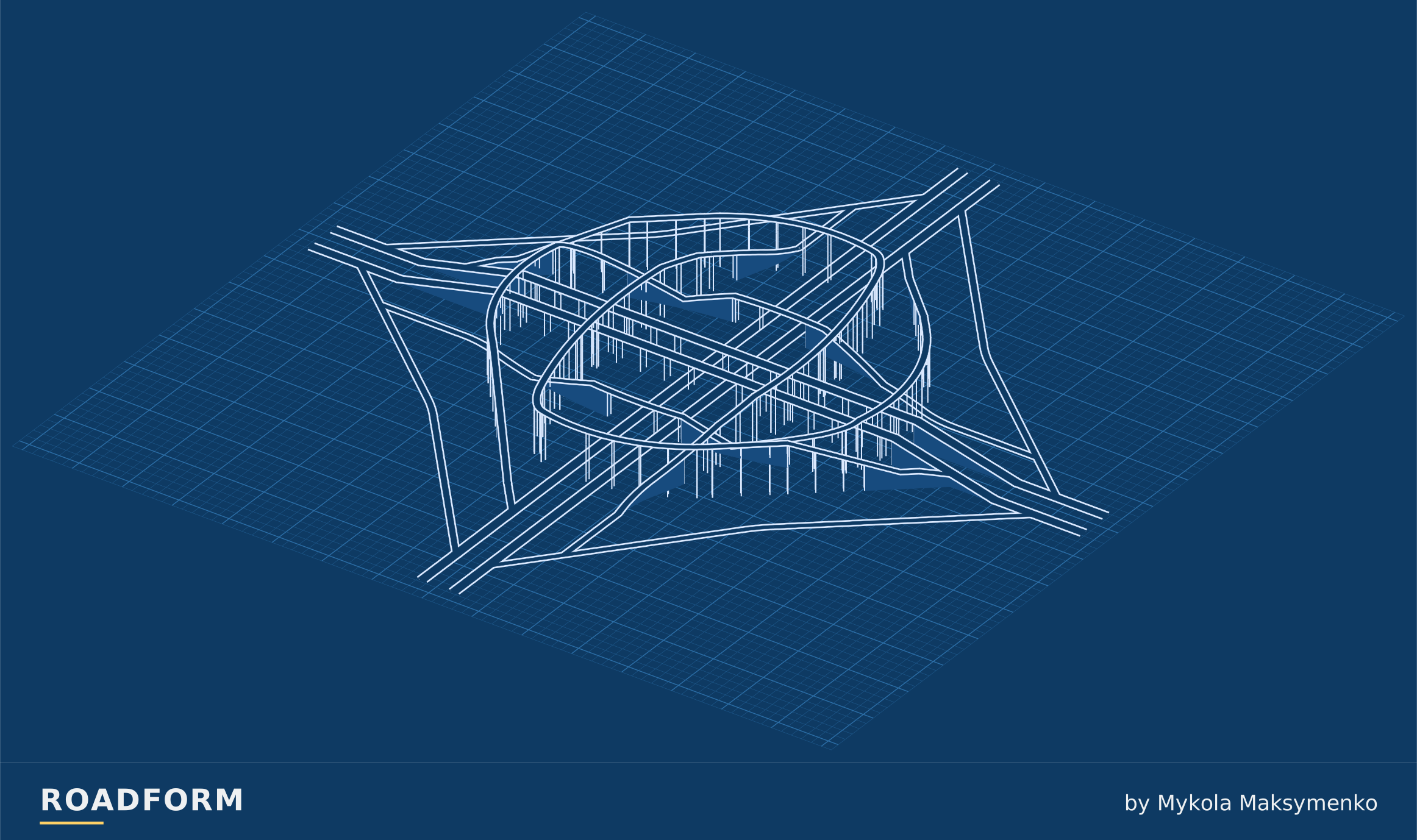
Choose which road runs above the crossing. This choice works with every form and size.
TF3 · S · Traffic side: Right. Heights ×3.

Sources and credits
- Roadway Design Manual, 15.3 Types of Interchanges, Texas Department of Transportation. www.txdot.gov
- 16@95 Improvement Projects: Frequently Asked Questions, Georgia Department of Transportation. www.dot.ga.gov
- Evolution of Interchange Design in North America, J. P. Leisch and J. Morrall, Transportation Association of Canada, 2014. www.tac-atc.ca
- Federal Highway Administrator Mendez Reviews Progress of Charlotte-Area's I-85 Interchange (FHWA 10-13), Federal Highway Administration, 2013. www.fhwa.dot.gov
- I-485 / I-85 Interchange R-2123CE, Mecklenburg/Cabarrus Counties (project presentation), D. Diggs (NCDOT) and M. Grey (Lane Construction), North Carolina Department of Transportation, 2014. connect.ncdot.gov
- US 69/SH 73 Interchange, Texas Department of Transportation. www.txdot.gov
- Selecting Optimum Intersection or Interchange Alternatives, J. E. Hummer, North Carolina Department of Transportation, 2026. connect.ncdot.gov
Real-world photo credits accompany each image. Roadform figures and measurements use Transport Fever 3.