On real roads
A Michigan left, or median U-turn, takes the left turns out of a crossing. A driver who would turn left goes straight through or turns right, makes a U-turn at a one-way opening in the median, and comes back.1 The restricted crossing U-turn, or superstreet, also sends the side road's through traffic that way; left turns from the main road usually stay direct.2
Several Michigan highways, particularly around Detroit, were built decades ago with wide medians, many of them 60 to 100 feet (18 to 30 m) across. By the early 1960s, many had capacity problems from interlocking left turns. To solve them, the Michigan Department of Transportation and local agencies replaced the intersections with median U-turns.3 By 2007 the state's highways had over 700 directional crossovers.4
FHWA's 2010 report calls the restricted crossing U-turn a variation of the median U-turn, with many similarities; its 2014 guide adds that each has its own design features.2,3 Traffic engineer Richard Kramer published it in the 1980s as the superstreet, an arterial that works like a pair of one-way streets.2,5 Independently, Maryland began developing it from 1988, and North Carolina built a series of them in 2000. FHWA's 2014 list of known RCUTs covers nine states; two of those RCUTs were built in Troy, Michigan, in the 1990s.2
Both forms serve the main road's through traffic first.3,5 FHWA's 2007 synthesis puts typical crash reductions at Michigan lefts at 20 to 50 percent, and their capacity gains typically at 20 to 50 percent too.4 One cost of an RCUT is the detour: where the side road's through and left-turn traffic is heavy enough, its extra travel time outweighs the main road's saving.5
- Levels
- 1
- Conflict points, Michigan left
- 16, counting its U-turn crossovers; a conventional crossing has 321
- Conflict points, RCUT
- 14 at four legs; a conventional crossing has 322
- U-turn crossover, RCUT
- at least 400 ft (about 120 m) past the crossing2
- Crashes, unsignalized RCUT
- about a third fewer, and half the injury crashes, where conditions are like those studied2
- Suits
- an RCUT, more left turns from the main road than through traffic from the side road; a Michigan left, the reverse3
- Median for trucks' U-turns, RCUT
- without loons, typically 47 to 71 ft (14 to 22 m) wide2
Where to see one
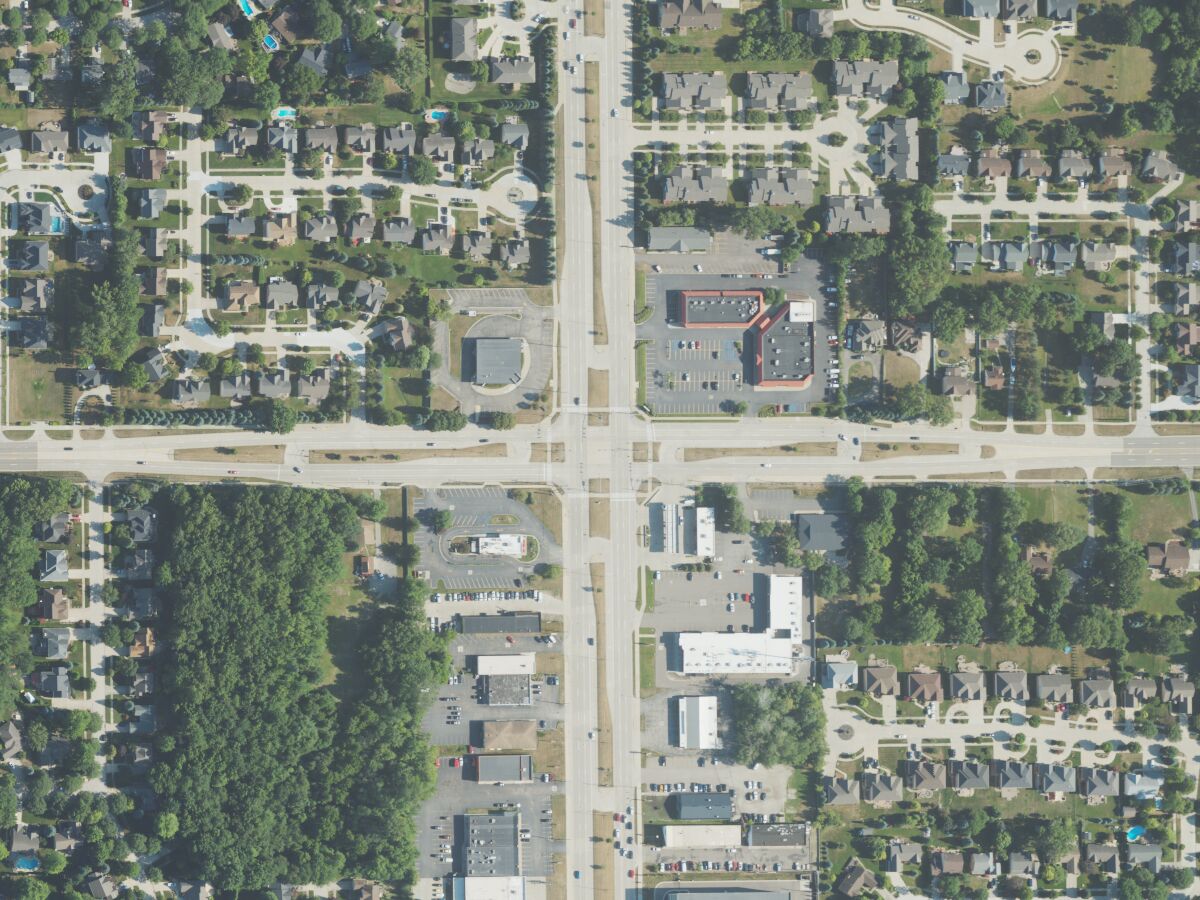
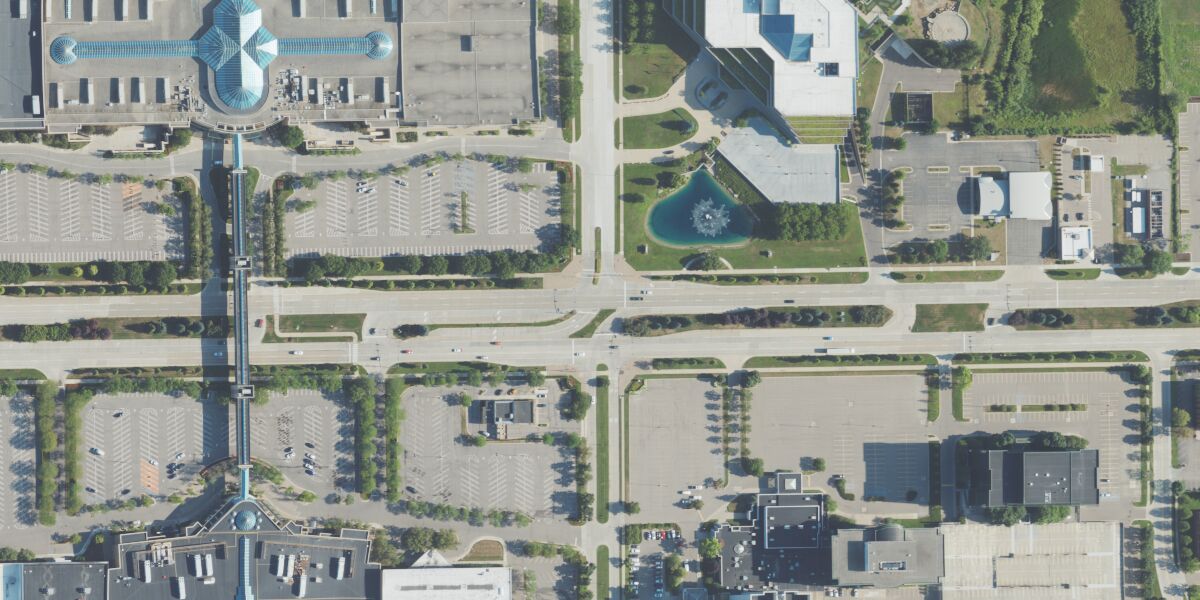
Oakland County, Michigan, from the air, 2022: a detail of an orthophoto of the USDA's National Agriculture Imagery Program. NOAA Office for Coastal Management / USDA-FSA Aerial Photography Field Office, PD-USGov, source Rochester Road at Wattles Road, Troy, Michigan, US. Map
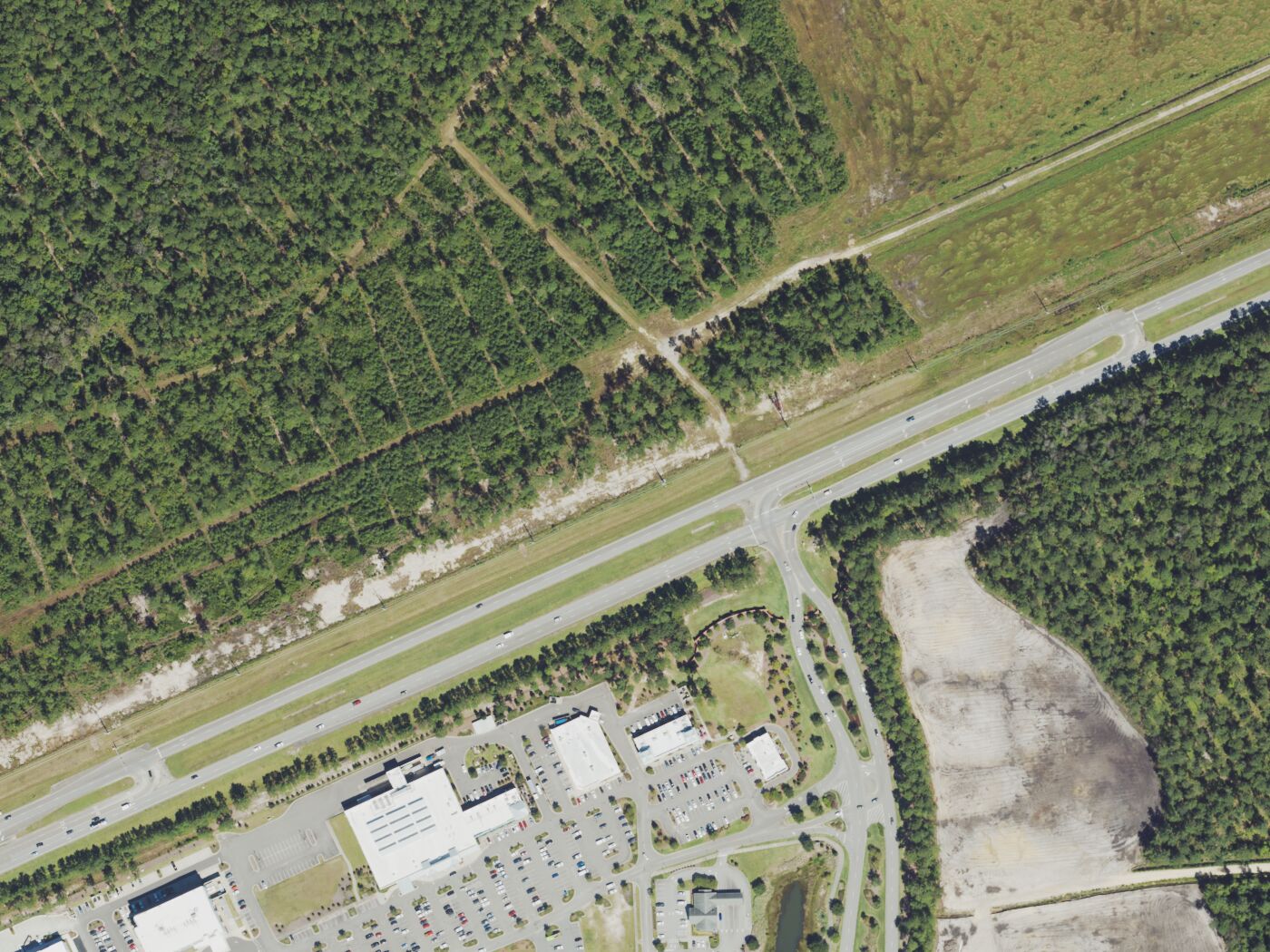
Brunswick County, North Carolina, from the air, 2022: a detail of an orthophoto of the USDA's National Agriculture Imagery Program. NOAA Office for Coastal Management / USDA-FSA Aerial Photography Field Office, PD-USGov, source US 17 at Brunswick Forest Parkway, Leland, North Carolina, US. Map
The Roadform adaptation
In Roadform
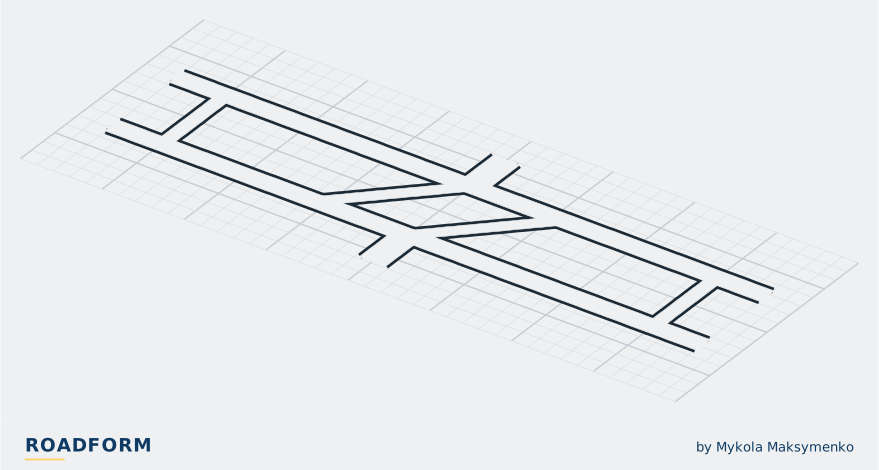
Roadform uses the restricted-crossing U-turn form. The side road turns right; its through and left-turn traffic uses the median U-turns.
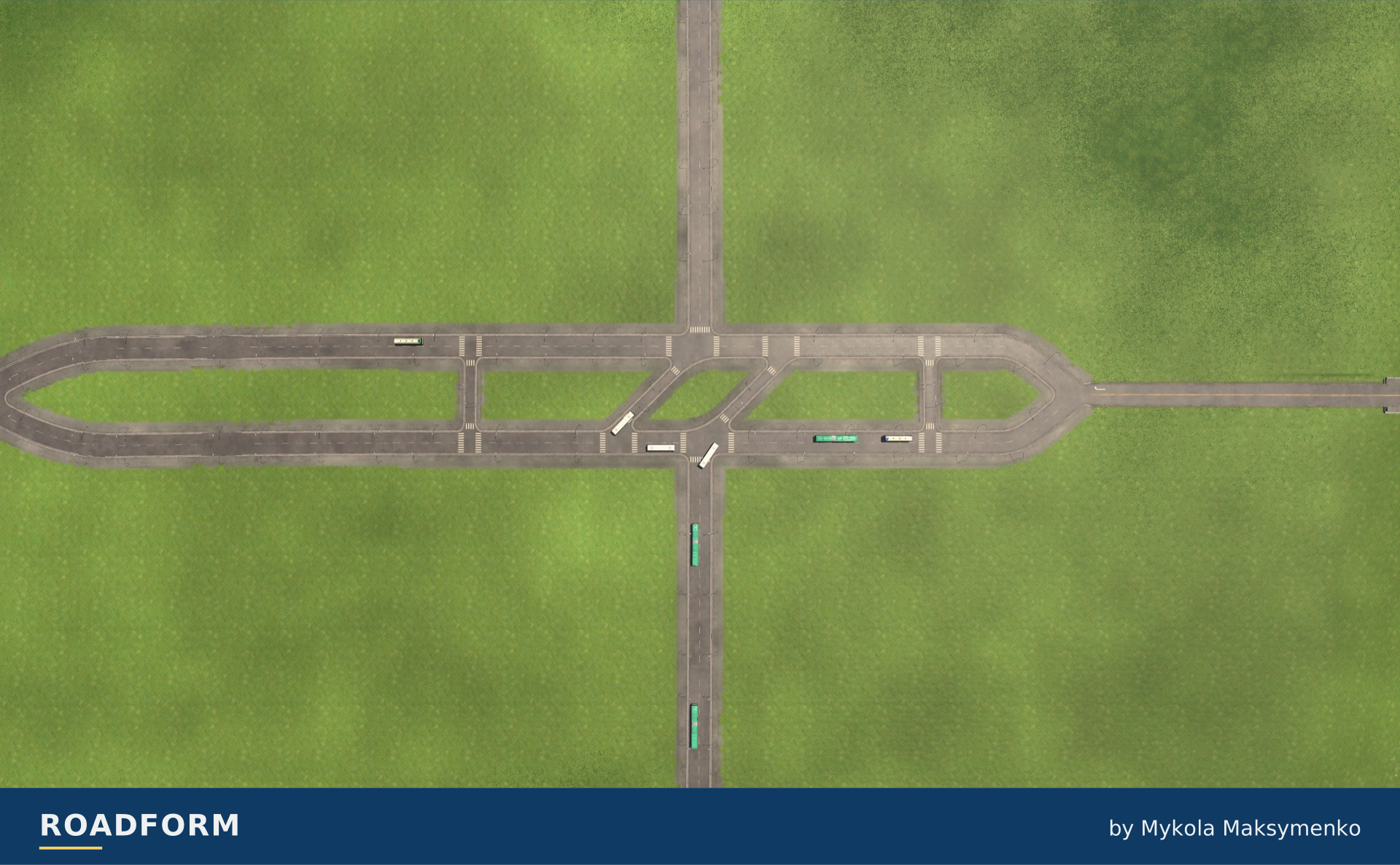
Where left turns go
The side road turns right and uses the median U-turns for other movements. On the main road, choose direct left turns or route them through the U-turns too.
TF3 · M · Traffic side: Right.
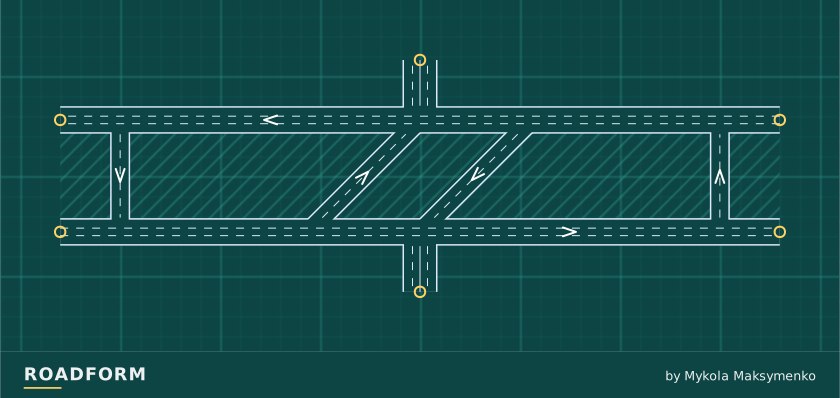
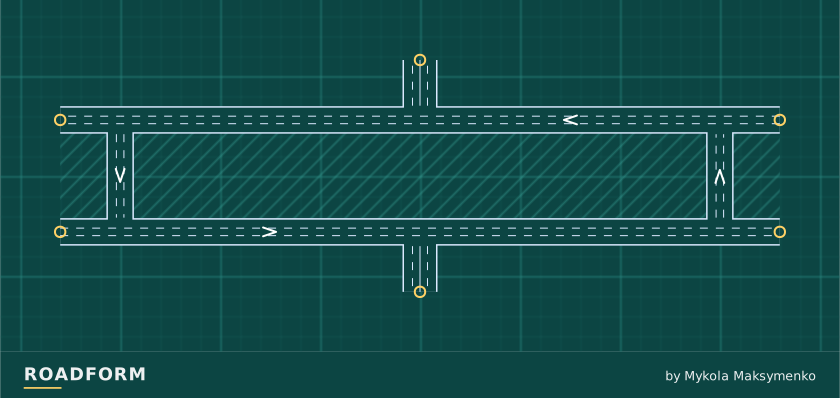
Scale and capacity
Size changes the road widths and the space the layout needs. The guide below uses the default arrangement. The layout reserves room for wider roads.
| Layout | Width × depth | Highest road | Lanes per direction |
|---|---|---|---|
| S | 260 × 102 m | 0 m | Main road: 2 Side road: 1 Turns: 1 U-turns: 1 |
| M | 360 × 116 m | 0 m | Main road: 3 Side road: 2 Turns: 2 U-turns: 2 |
| L | 460 × 116 m | 0 m | Main road: 3 Side road: 3 Turns: 2 U-turns: 2 |
Sources and credits
- Median U-Turn Informational Guide (FHWA-SA-14-069), Federal Highway Administration, 2014. rosap.ntl.bts.gov
- Restricted Crossing U-turn Informational Guide (FHWA-SA-14-070), Federal Highway Administration, 2014. rosap.ntl.bts.gov
- Alternative Intersections/Interchanges: Informational Report (FHWA-HRT-09-060), Chapter 3 Median U-Turn Intersection, Federal Highway Administration, 2010. www.fhwa.dot.gov
- Synthesis of the Median U-Turn Intersection Treatment (FHWA-HRT-07-033), Federal Highway Administration, 2007. www.fhwa.dot.gov
- Alternative Intersections/Interchanges: Informational Report (FHWA-HRT-09-060), Chapter 4 Restricted Crossing U-Turn Intersection, Federal Highway Administration, 2010. www.fhwa.dot.gov
Real-world photo credits accompany each image. Roadform figures and measurements use Transport Fever 3.