On real roads
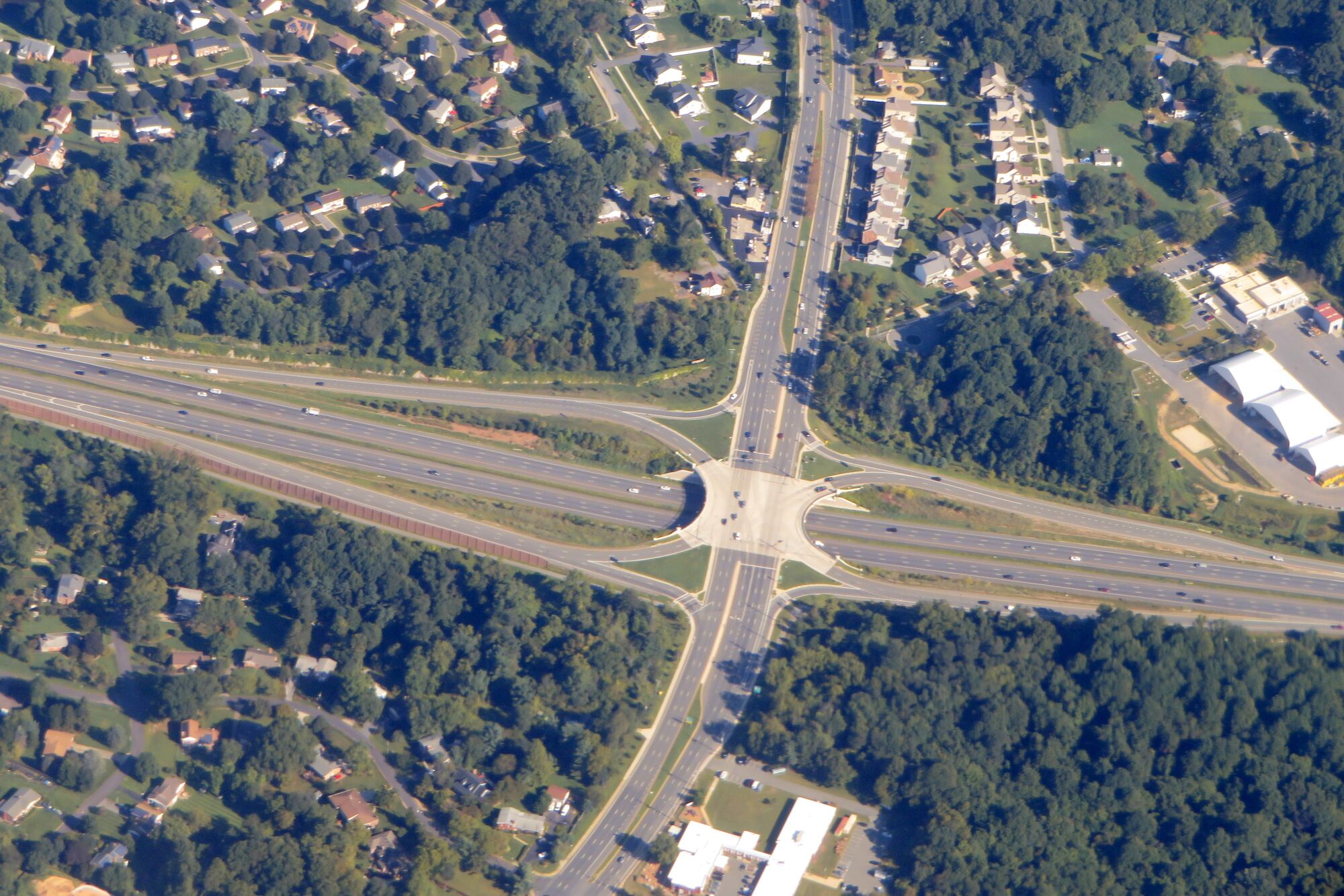
A single-point urban interchange, or SPUI, is a diamond interchange whose four ramps meet the cross road at one junction with traffic lights, instead of two.1,2 The junction lies under the bridge or on it, and all four left turns pass through it; left turns from opposite directions pass each other instead of crossing, so both can go at once.3,4 It is also called a single-point diamond interchange (SPDI), a single point interchange (SPI) or an urban interchange.4,5
At least two American engineering firms proposed the design independently in the mid-1960s, and both designs were built in the 1970s.3 The first in the United States was completed in Clearwater, Florida, in February 1974; Greiner Engineering of Tampa designed it and called it an urban interchange.3 What was probably the second was completed in Moline, Illinois, in September 1975.3
It was one of the designs with more capacity that replaced the compressed diamonds of the 1950s.6 By August 1989, 27 were open in 14 states, and more than 50 others were planned or under construction.3 Interchanges like it were built in Germany and Greece, the German one in Cologne, near the Rhine, by 1975.3 The 1990 edition of AASHTO's design policy, the Green Book, did not mention it, though one was shown in it.3 It is often used when an interchange is rebuilt.3,7
It suits cities, where land is scarce and dear.2 It needs less land than an ordinary diamond, but the manuals do not agree on how it compares with a tight diamond.1,8,9 One signal runs the junction, usually in three phases: the left turns from the cross road, then its through traffic, then the left turns off the ramps.3 The price is the bridge, though the land it saves often makes up for it.2 Where the highway passes over the junction, its bridge must span all of it with no pier in the middle; a single-span bridge is typically about 220 feet (67 m) long.2,3 Where the junction sits on the bridge, the deck tends to be very wide.2 The wide junction also needs longer clearance times at each change of lights, and it is efficient where the left turns are balanced.4,8
- Levels
- 2
- Junctions with the cross road
- 1, with traffic lights1
- Signal phases
- 3, or 4 with one-way frontage roads3
- Highway bridge over the junction
- one span of about 220 ft (67 m), or three of about 400 ft (122 m) in all3
- Land
- less than an ordinary diamond1
- Suits
- cities, where land is scarce and dear2
- Limit
- the cost of the long single-span bridge and retaining walls9
- Crashes
- about as many as at comparable diamonds, fewer with injuries (13 sites, cross-road crashes only)10
Where to see one
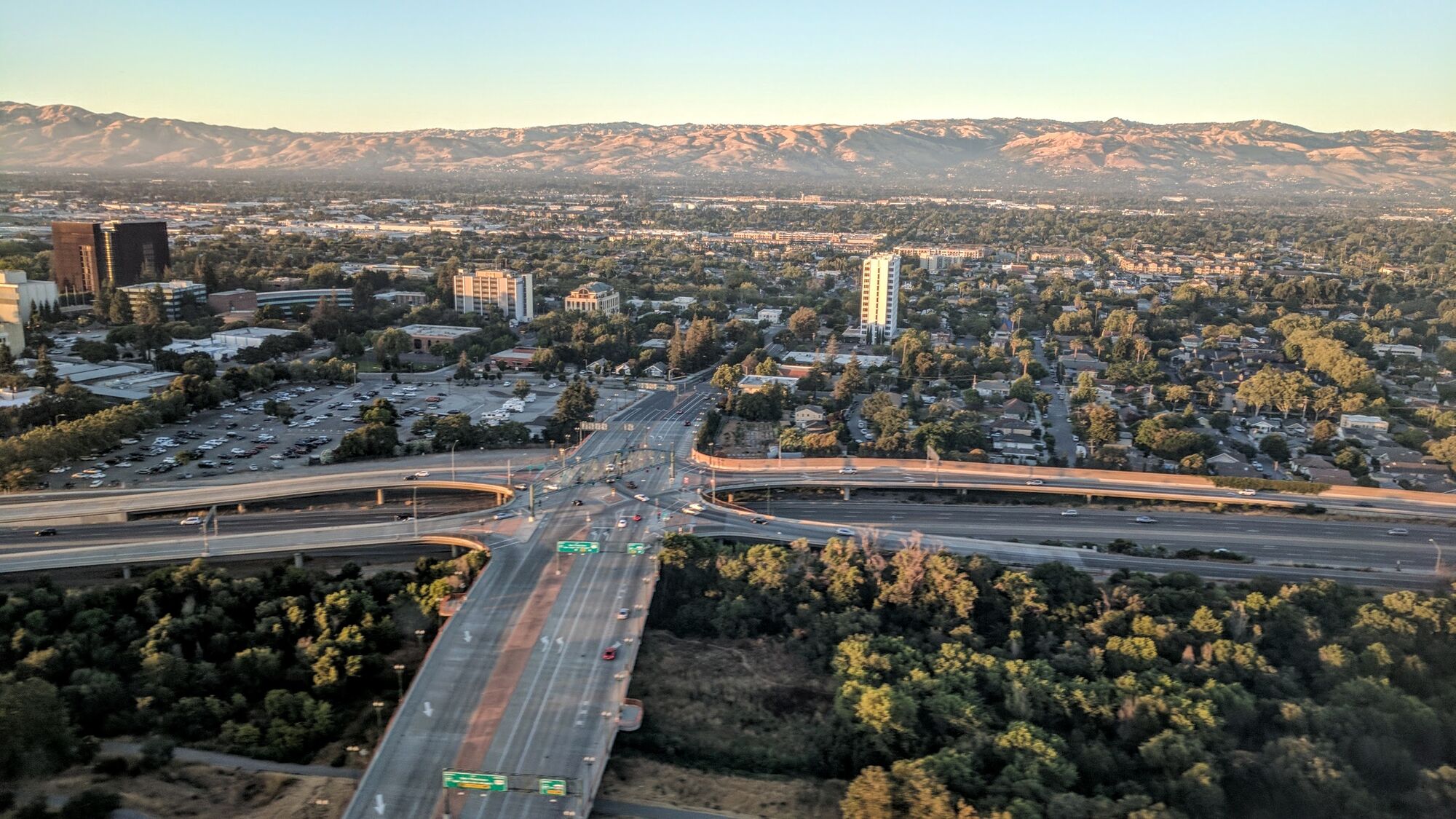
The Taylor Street single-point urban interchange on California State Route 87, just south of San José International Airport, 2017. Dicklyon, CC BY-SA 4.0, source, cropped, shown in greyscale SR 87 at Taylor Street, San Jose, California, US. Map
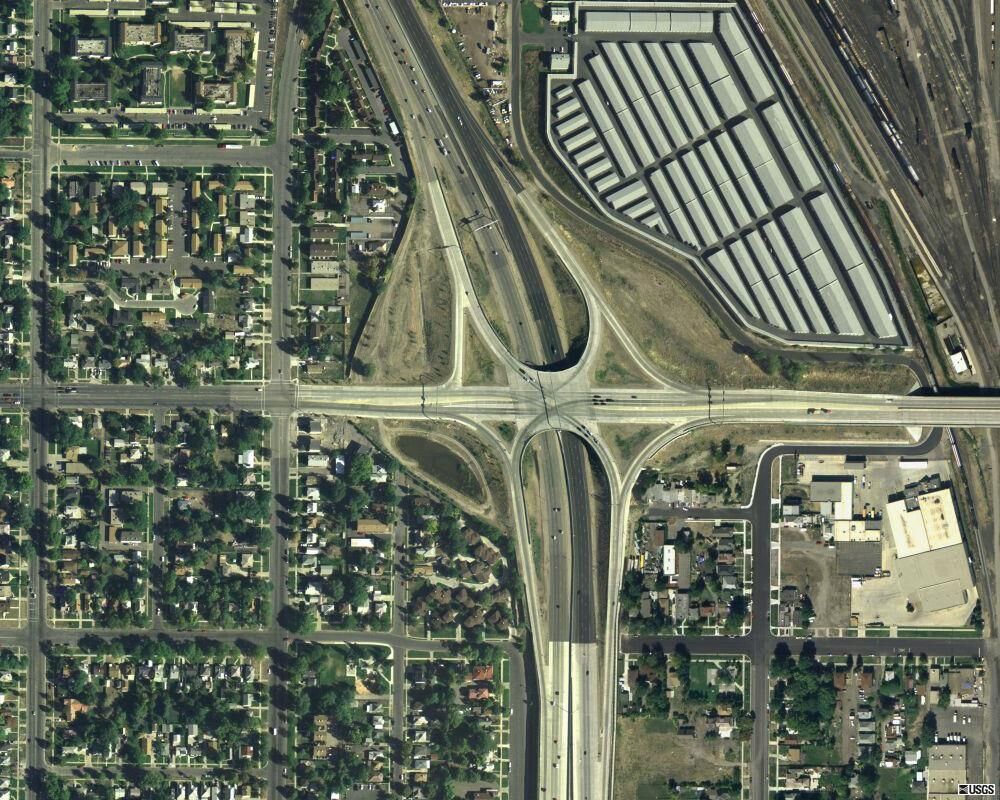
The single-point urban interchange at 600 North on Interstate 15 in Salt Lake City, Utah, 2003. United States Geological Survey, PD-USGov, source I-15 at 600 North, Salt Lake City, Utah, US. Map
The Roadform adaptation
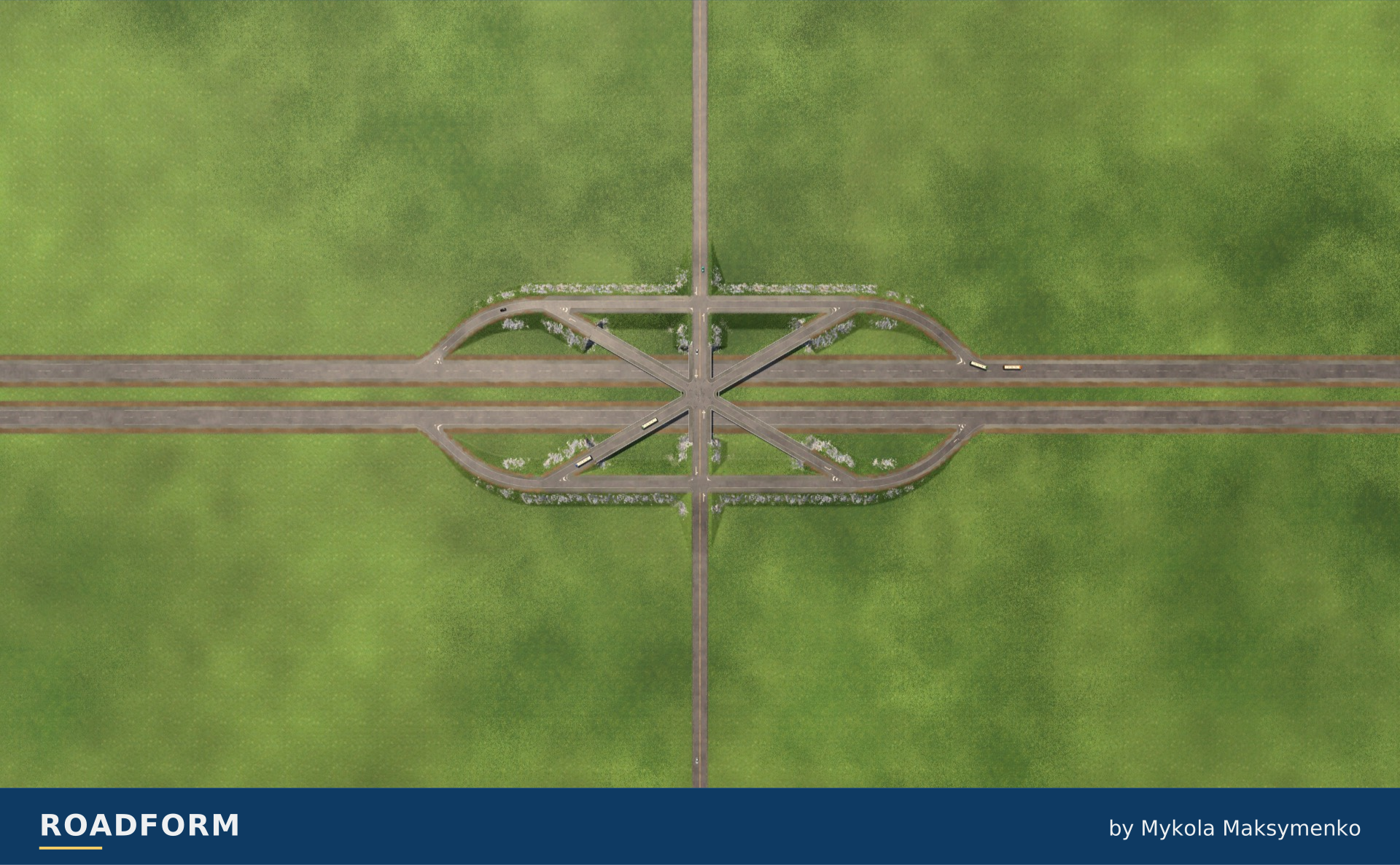
In Roadform
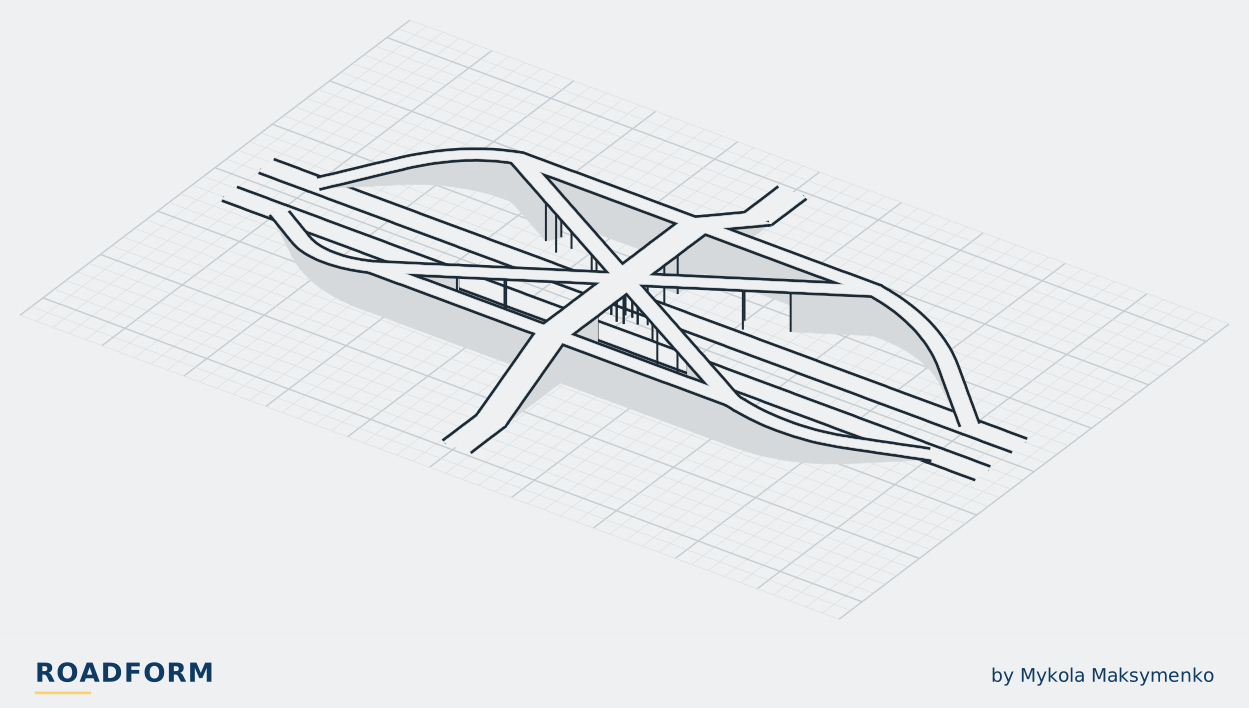
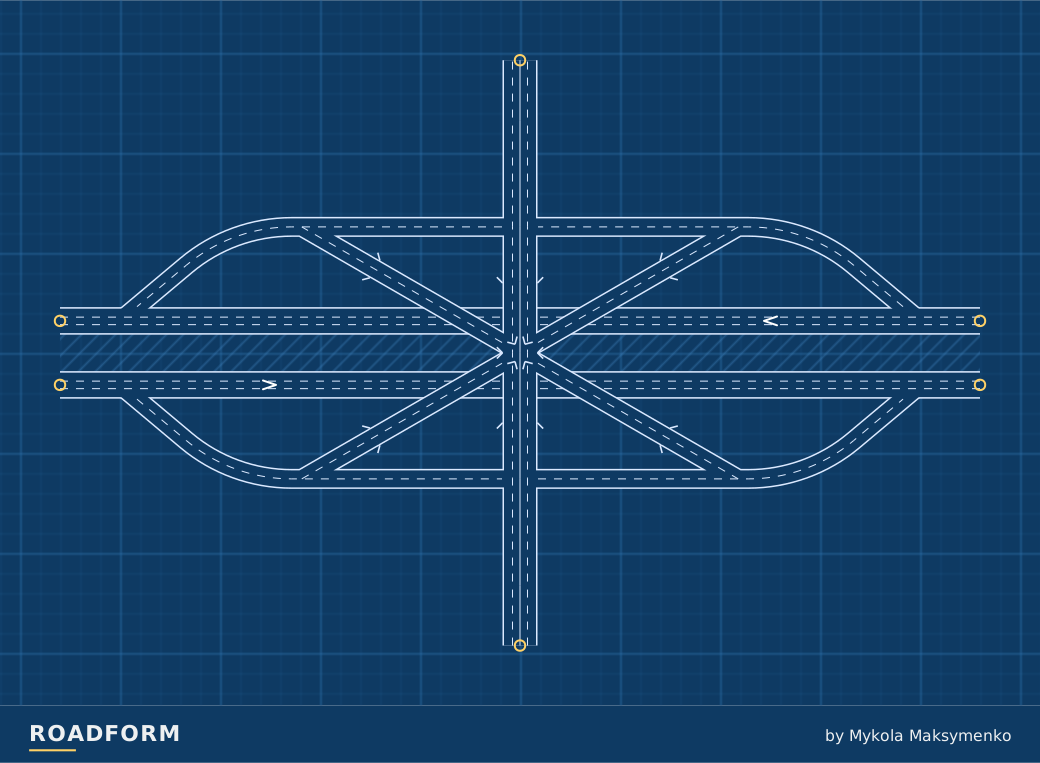
All left turns meet at one junction at the centre; right turns bypass it.
Reading the connections
TF3 · M · On top: Road · Traffic side: Right.
Scale and capacity
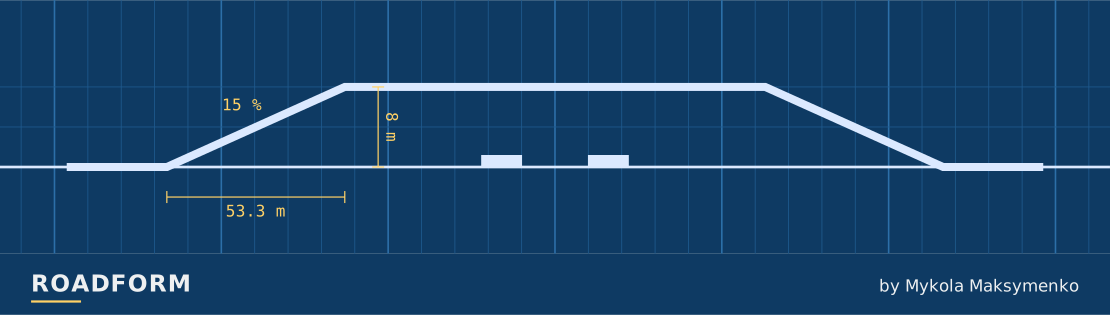
Size changes the road widths and the space the layout needs. The guide below uses the default arrangement. The layout reserves room for wider roads.
| Layout | Width × depth | Highest road | Lanes per direction |
|---|---|---|---|
| S | 450 × 289 m | 8 m | Highway: 2 Cross road: 1 Ramps: 1 |
| M | 460 × 293 m | 8 m | Highway: 3 Cross road: 2 Ramps: 2 |
| L | 460 × 293 m | 8 m | Highway: 3 Cross road: 3 Ramps: 2 |
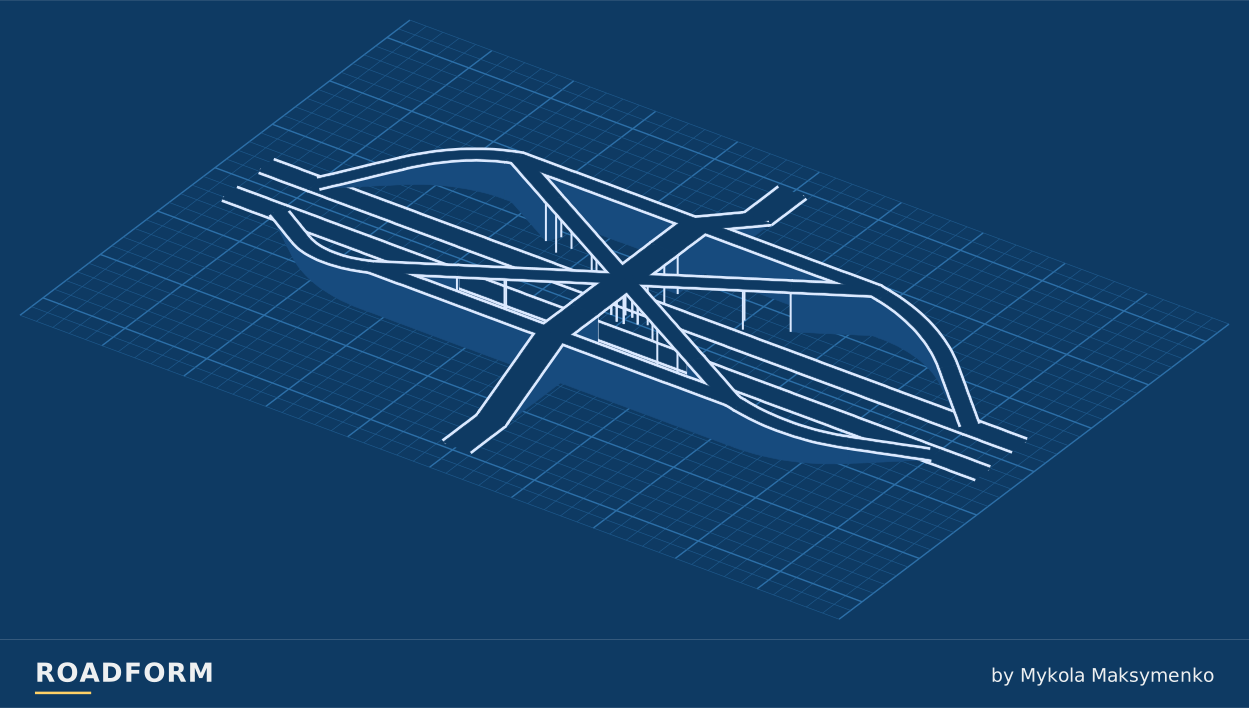
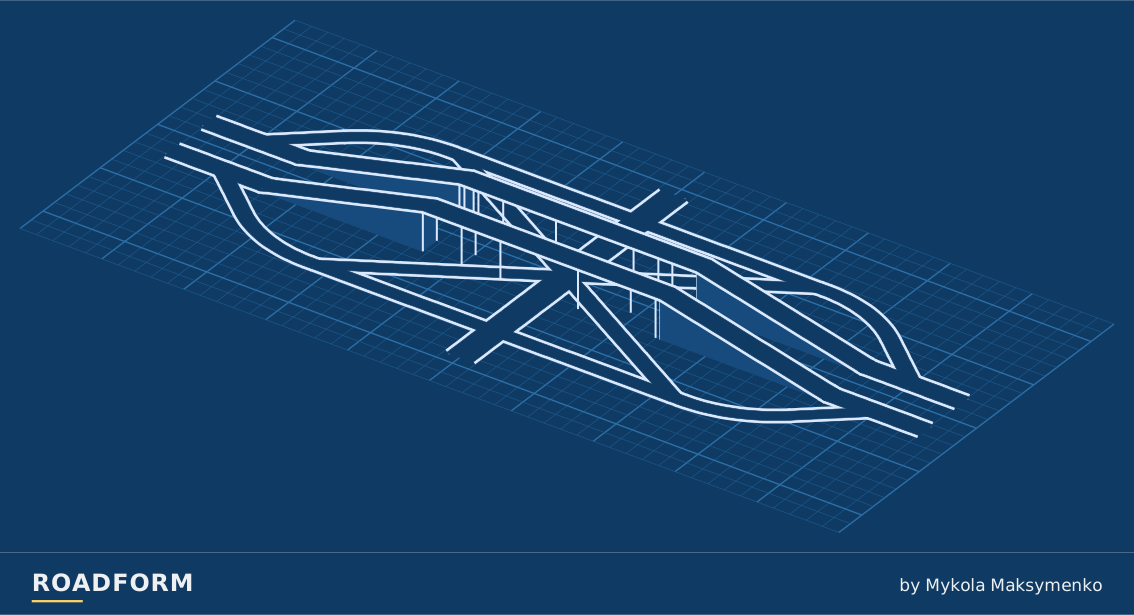
Which road takes the bridge?
Choose which road runs above the crossing. This choice works with every form and size.
TF3 · M · Traffic side: Right. Heights ×3.
Sources and credits
- Design Manual M 22-01.23, Chapter 1360 Interchanges, Washington State Department of Transportation, 2024. wsdot.wa.gov
- Engineering Policy Guide, 234.4 Single Point Urban Interchanges (SPUIs), Missouri Department of Transportation. epg.modot.org
- NCHRP Report 345: Single Point Urban Interchange Design and Operations Analysis, C. J. Messer, J. A. Bonneson, S. D. Anderson and W. F. McFarland, Transportation Research Board, 1991. onlinepubs.trb.org
- Roadway Design Manual, 14.12 Single-Point Urban Interchange, Texas Department of Transportation. www.txdot.gov
- Highway Design Manual, Chapter 500 Traffic Interchanges, 502.2 Local Street Interchanges, California Department of Transportation, 2023. dot.ca.gov
- Evolution of Interchange Design in North America, J. P. Leisch and J. Morrall, Transportation Association of Canada, 2014. www.tac-atc.ca
- Design of new Tucson interchange promotes efficiency and safety, Arizona Department of Transportation, 2017. azdot.gov
- Design Information Bulletin 92: Single Point Interchange Guidelines, California Department of Transportation, 2018. dot.ca.gov
- Roadway Design Manual, Chapter 10 Interchanges, 10.2.6 Single-Point Diamond, South Carolina Department of Transportation, 2021. www.scdot.org
- Crash Comparison of Single Point and Tight Diamond Interchanges, J. Bared, A. Powell, E. Kaisar and R. Jagannathan, Journal of Transportation Engineering, 2005. rosap.ntl.bts.gov
Real-world photo credits accompany each image. Roadform figures and measurements use Transport Fever 3.